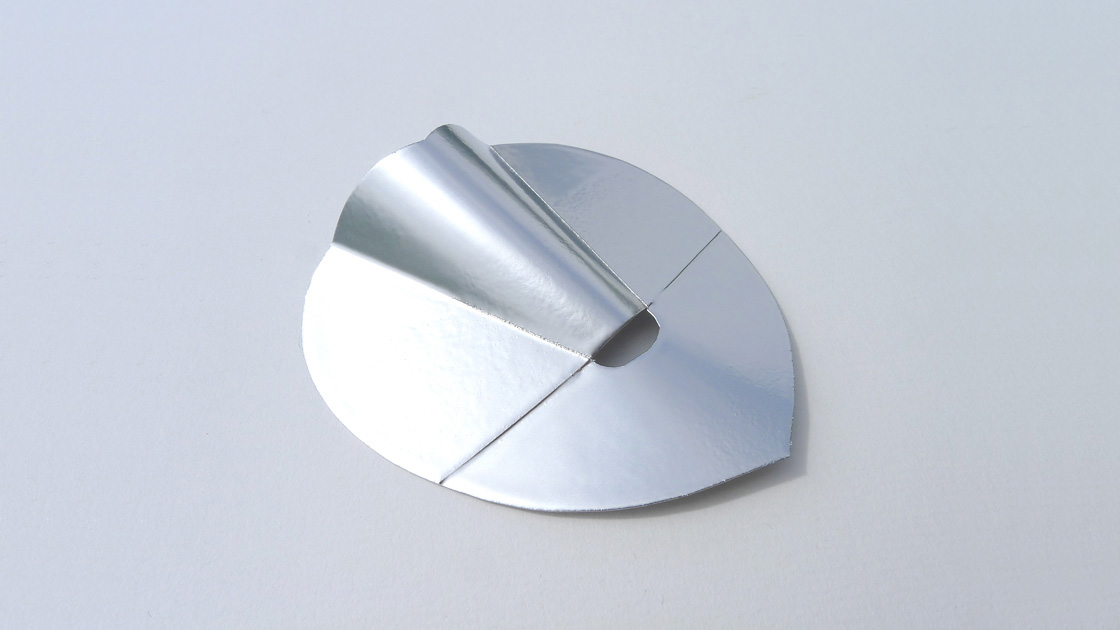
This blog is dedicated to the sublime instruments called nose flutes and which produce the most divine sound ever. We have chosen to discard all the native models from S. Pacific and Asia, for they need fingering to be played. We'll concentrate on "buccal cavity driven" nose flutes : the well patented and trademarked metal or plastic ones, plus, by a condemnable indulgence, some wooden craft or home-made productions.
Showing posts with label home made. Show all posts

Jan 27, 2021

Twinette!

A pair of cheap referee whistles, welded together, bored, sanded and buffed, with silicone tubes as nose inserts. Not very ergonomic, but powerful (and so elegant when plugged in the nose!)

Jan 17, 2021

Sambarina!

Made with a Bocarina® nose hood and a Acme® Samba whistle, which belly was bored (1/2 inch). Needs a good air flow (as any whistle), but works fine!

Sep 23, 2017

Nose Flute #5 by Steven Parkes


Our friend Steven Parkes builds wooden nose flutes, from time to time, just for pleasure, but also for his children. We already showed his work (check this post). And here is the #5 – for his daughter Ingrid – paired with a 3D photo and a video showing the making process.


Here is an interesting stereoscopic 3D photo. In order to get the tridimensional effect, you have to
1) open the full size picture by clicking on it
2) stand at a distance of ±20 in./50cm
3) cross your eyes (squint) in order to get both left and right images superpose


And here is the video of the making, from the design to the Tru-Oil finishing:


Sep 22, 2017

Students (try to) reinvent the Nose Flute


Each year, I begin the design courses I give in an engineer school by asking the students to "invent the nose flute", without pronouncing its name. They come from many countries (this year: Brazil, Argentina, Algeria, Tunisia, Uzbekistan, Germany and a few from France) but they don't know nose flutes.

I expose how a whiste blows, explain that we could get a variable tonality if we'd replace the chamber by one that could inflate or deflate. I suggest the mouth to play this role, and thus, the nose breath to blow instead of the mouth. I ask them to invent an object that could whistle this way, and to point some attention on ergonomics.


Most of the students are not confortable with hand drawing, and the results are sometimes funny, or difficult to understand. However, some propositions are interesting because they help to understand ... nose flute shape history!
As virgin in matter of nose flute, they know neither the vintage nor the modern shapes. But some of their drawings look very similar to shapes *we* know well!

Many of them feel the need of preventing air leaks and choose either nostril plugs (like the Kunimaru) or a nose hood (like the Nasalette). Some – sometimes the same – design an insert for the mouth (like the Nasalette and the Couchois' whistle). Also, some students feel the need of a handsfree instrument, and generally resort to a band that joins the ears, exactly as William Carter did with the Nasalette.

It's also interesting that most of the students drew a nose flute looking like a torture – or at least medical – device, and seem not to imagine it could be a funny musical instrument that give pleasure to to player and (sometimes) to the audience.

Some nose flute that wouldn't work...


Some nose flute that would possibly work with minor changes...


My prefered one, which doesn't look like a medical device. It looks very alike a plastic Humanatone, to which a heel handle would have been added:


Next week, I'll show them several nose flutes, and play a bit, to prove it can be a elegant, simple, funny and powerful instrument.

--------

[EDIT] : After having read this post, Mr. Ken Tanaka (see this post) quickly made a paper nose flute according to the model drawn by one of our students (the last picture). Here is the pieces he assembled, and the short video:


Jul 28, 2016

Custom 3D printed Nose Flutes


Some weeks after we posted an article about the chronology in nose flute 3D printing (check here), our friend and great whistle collector Piet Visser sent us a link to a new nose flute model on Thingiverse.com. In this Jun 9, 2016 entry, the author Samwell_II has redesigned (improved) the original model by Markbrocklebank, and explains:

Kind of a long process. I made one of these a while back and aside from a few problems with my old worn out print bed, everything worked great.

A few months later, I decided to make these for a family reunion. I wanted to put text on it along with a hole for a necklace or lanyard or anything like that, so I actually redesigned the whole thing. I opened the .STL in solidworks and simply remade it based on what I saw there and the measurements I got from the one I already printed. It took a couple revisions but I got a functional design and duplicated it so that it made me 6 at a time and printed out 30 or so. Overall, very happy with the design and I am very glad that someone else already made one.

Indeed, Samwell printed a nice bunch of nose flutes. Here they are, with his 3D printing machine (pictures © by Samwell P.):


So... I contacted Samwell, and asked if he'd wanted to make and sell me some samples. He kindly accepted for a very modest price, and even proposed to customize the flutes with 'noseflute.org' instead of the original '2016' logo. The process took some time, and a little adventure happened, while the machine run out of red ABS wire: in the following flutes, the two red ones are unfinished, yet work and sound as the complete ones.


The model design follows the shape of the wooden 'vietnamese production' type, and thus doesn't yet get the whole benefits offered by 3D printing. I mean, it took a (short) time to create new and specific designs for houses built in concrete: the first reflex was to copy shapes born from the use of bricks or stones. It is only after a little while, that architects understood how to express the "reality" and the essence of concrete, designing long windows and modeling shapes as they would have done with clay. Here, the 3D printed flutes repeat a typical nose flute design which came out from wood working, while they could have (they will, in the future) gotten the full advantage of the new tech. On that very point, these flutes are obviously early 'witnesses' of a production mean that just began.


At first, when I received the flute, I was very disappointed: I was not able to produce any sound from them. I thought it was because the airway was too thick... But finally, I got able to play the little red ones. And finally understood what was going wrong. It was my mouth position. I know how to toot nose flutes, including the Vietnamese type, but the problem was due to size of my 3D printed new babies! I adapted (placing my bottom lip much upper and against the back of the mouth shield, and any of them worked fine :) Indeed, these flutes are children sized.

Now, on the sound side, these ABS flutes are not convincing. Not because of the design, not because of a lack of care in the making (contrarywise, Samwell did a great job), but because of the limitations of the home-made 3D printing. Remember the time of the first inkjet printers that you could have on your desktop... The images produced then were rather blurry and inaccurate, compared to the fine photo quality they achieve now. It is the same for 3D printers. If you except professional ones, the detail granularity is not fine enough to build a correct labium, which has to be hard, sharp and precise. So, these flutes work, but they aren't great instruments. I would compare their quality to the current Humanatone production.

Details:


I want to thank warmly Samwell P., who very kindly and generously accepted my request and worked finely and quickly. Greetings to Murray, Utah.


Jul 19, 2016

The Beautiful Work of Marco Stagnaro (Mirko)

Marco Stagnaro, a.k.a. Mirko, is an italian hunter from Sestri Levante (Genova), who practices the Ars Venandi, 'La caccia con il chioccolo': hunting with bird calls. He even wrote a huge book (700p) on the topic ('U và cun à ciocciua - La caccia con il chioccolo'), and publishes many videos (check here).


I am not interested in hunting (I even have personal reasons to dislike it), but I like bird calls. Marco Stagnaro builds himself his 'chioccoli', and they are as beautiful as some are complex or creative.

Mirko began to build them in 1990, as a hobby, with passion. Among them stands the 'RM61', a multi-sound instrument, on the base of a brass nose flute. The whistle can imitate the little owl, the long-eared and the tawny owls, the black bird, the jay, the buzzard and even shrill meowings!

From Mirko's description (automatic translation from Italian):

« The idea is born from studying the use of nasal flute. Continuing always the search of being able to do more sounds (imitation) to attract animals without the use of the hands. (...) The tool that I present today to you (RM 61) is composed of: the flute where nasal breath performs very well the sound of the owl, the chioccolo connected to the nasal flute and the owl in the vicinity of the nozzle of the chioccolo. Everything is held tight to the mouth and the nose by a rubber band.
(...)
05/18/2015 »


Now, look at this sophisticated beauty…

All pictures by Marco Stagnaro, all rights reserved:


All Mirko's creations are unique and numbered, not for sale (Alas..!)

Jun 30, 2016

Paper nose flute by Susumu Yasuda: v.2 !


Less than one month ago, we published the template and some pictures of the 'Kamihanabue' ('paper nose flute') designed by Mr. Susumu Yasuda (check this post). Susumu-san just sent us an update! The new version, downloadable here, is very similar with the previous one, but even more elegant and easier to build: some angles have been replaced by curves. The airway and the nose rest are now finely designed. Actually, the new template offers you to build both versions, according to the color you choose for the lines to be folded or cut. For the new version, don't forget to pre-mark the half circle of the nose rest: it will form nicely and very easily.

Here is the one I made in 2 minutes (much more for the paint spray :):