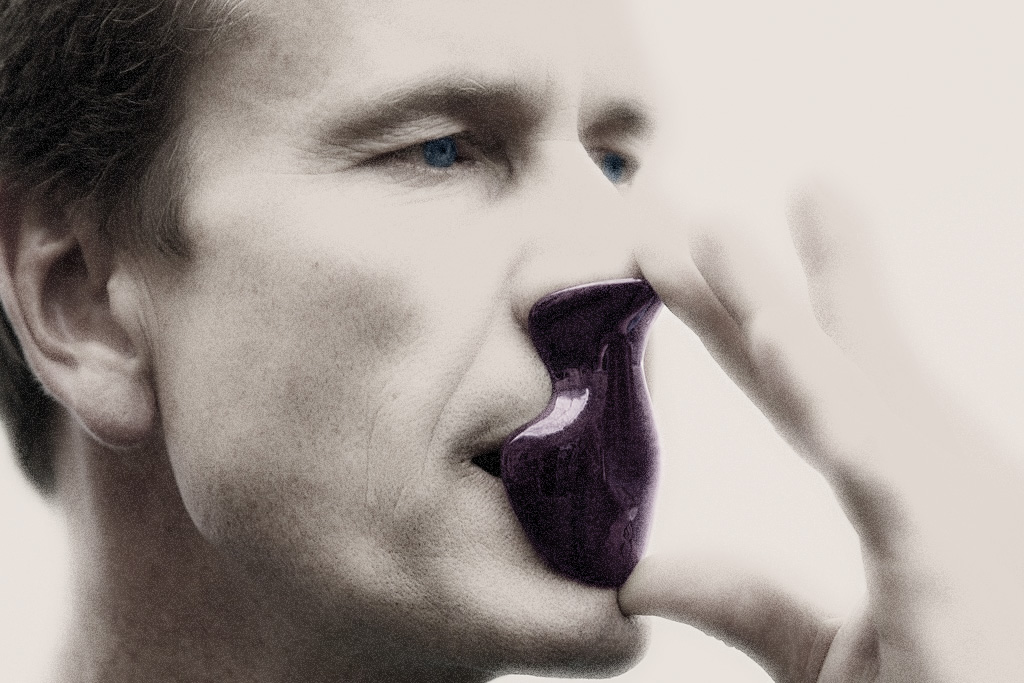
Let's continue our exploration of the new Bocarina
® Pro with an interview of its inventor and designer, Chris Schuermans from Pretoria, South Africa. We hope that this discussion will answer all the kind of questions that occured with this new model.
Big big thanks to Chris Schuermans for having taken the care and the time to answer us.
 Noseflute.Org:
The Bocarina® is a super good nose flute, certainly the best manufactured one. Why did you decide to create a new one ?
Chris Schuermans:
Thank you for the compliment! There were a few factors that prodded me in that direction.
It was blatantly obvious that there was room for improvement. Practically as soon as the first design went into production, I realised that it is not a great design and the playability of the Bocarina
® is not ideal.
The high notes are difficult to control and come out harsh because the instrument has to be blown hard in the high range. This also means it uses a lot of breath to play the instrument.
The other problem was the ergonomics; the old model did not fit well on many face types because the nose saddle was too narrow.
Lastly, I did not like the look of the insert on the face side of the Bocarina
®. The joint gaps are unsightly.
The new and the original nose saddles:
 NFO:
NFO:
When did the process start, from the first idea until the production ? What were the different steps of this process ? What is the reason of the wavy labium ?
CS:
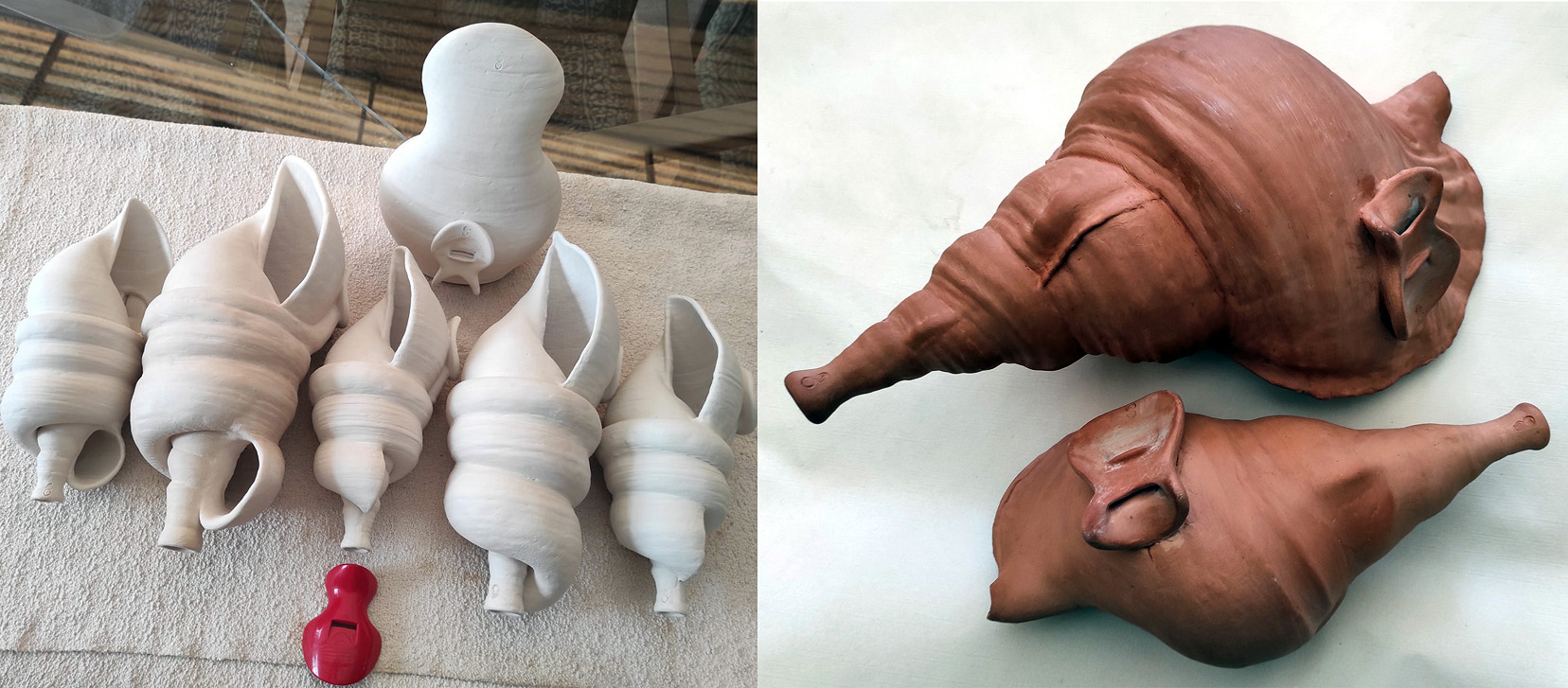
I guess it started when I made a ceramic Bocarina
® that played better than the mass produced plastic model. The high notes were sweet and it was almost effortless to play and control the high notes. Furthermore,
I could play the instrument very softly. (whistles tend to squawk when they are blown softly)
This initiated the search for a better fipple. That was about three and half years ago... I did a lot of experiments with clay whistles but I could not figure out what worked and what did not. I needed a more scientific approach so I resorted to 3D Computer Aided Design (CAD). My first few 3D CAD models were printed with a 3D printer. However, the resolution of the 3D printer was just not good enough and it was too expensive so I decided to buy a CNC (computer numeric controlled ) milling machine.
I started experimenting with ocarinas because they are easier to mill than nose flutes. My aim was to make the fipple as efficient as possible, so I applied a few basic principles of aerodynamics to my fipple designs. I filleted the corners of the air passage and the fipple.
I also figured out that a straight line for the labium edge was not ideal. I tried a U-shaped labium edge but I got much better results from a wavy labium edge. I also curved the fipple surfaces outward to allow the air to expand as it leaves the end of the airway.
I have a feeling that this new fipple design could set a new standard for all whistle and flute makers.
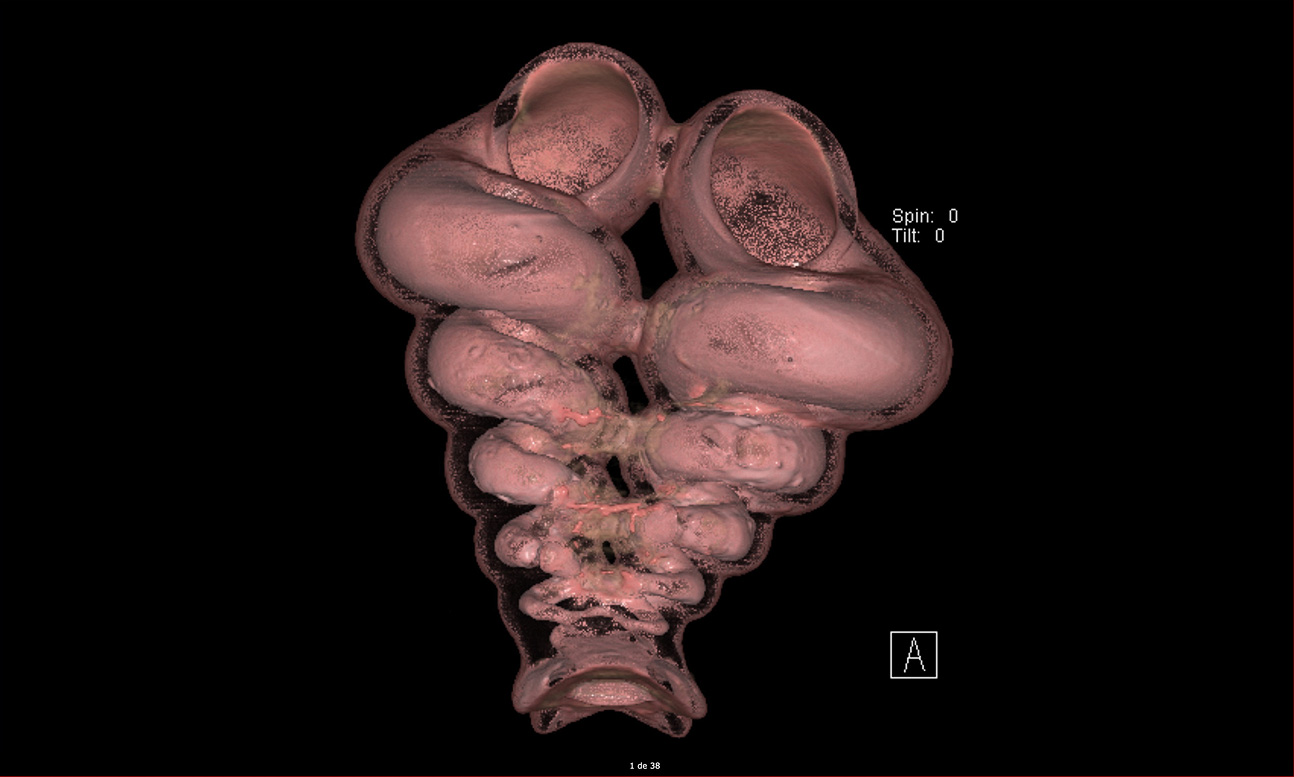
Renderings of the WIP and final fipple design:
I experimented with different sized fipples and the spacing of the labium edge. During the course of experimenting with the fipple I also refined the shape of the body in gradual steps.
NFO:
I know you encountered a bunch of difficulties that you overcame with success: please could you detail ?
CS:
There were some challenges and a few bumps in the road.
Firstly, to get the instrument to fit as many different faces as possible became very challenging because I could not get any facial ergonomic data about the average human face.
Once the design of the new Bocarina
® was finalised the mould design for the toolmaker had to be done. This became a major obstacle. I eventually found a German toolmaker/ mould designer who took on the work, however, he gave up after about 20 hours of work. Eventually, I had to design the punch and cavities for the moulds. By the time I finished the designs, the toolmaker who made my previous mould couldn't slot in my work because he had taken on a big project. This presented me with the next challenge; to find a toolmaker who was interested in taking on a difficult project.
There were also a few hiccups and delays with the mould making process.
NFO:
The new Bocarina® has got a peculiar design! Why did you use two different materials ? Which are they ?
CS:
The aim of the two part design is to improve the ergonomics and aesthetics.
The intention, is that by having a flexible body, the instrument will fit on more face shapes.
The air passage is made of a hard ABS (Acrylonitrile-Butadiene-Styrene) plastic which is over-moulded with a flexible TPE (Thermoplastic Elastomer)
NFO:
This nose flute is clearly « pure, sharp and quick » oriented… Is it a « professional » model ?
(if the Bocarina® was a Grand Tourism Ferrari, is this one the Formula 1 model ?)
CS:
I appreciate the comparison -- Thank you for the compliment Antoine!
The goal was to make an efficient nose flute. I do hope that eventually it will be used professionally.
It is more difficult to master than the 'old' Bocarina
® so it is not intended for beginners.
NFO:
How should we call this new flute ? « the new Bocarina® », « Bocarina® II », « Clarytone® » ?
CS:
I have already been asked this question and I'm still not sure.
The name Bocarina
® is derived from Boca or Buca, Spanish and Latin for mouth and ocarina (closed vessel flute), suggesting that the Bocarina
® turns your mouth into a closed vessel flute.
I was hoping that this would end up being the generic name for nose flutes, because technically, I think, the name nose flute is not descriptive enough -- the instrument is merely blown with the nose and the mouth forms the sounds.
So, at best it should be called a nose and mouth flute.
Clarytone
® is the name of my business but it could also serve as the name of the 'new' Bocarina
®
How about Bocarina
® Pro?
NFO:
How many colours will be available ? Which ones ?
CS:
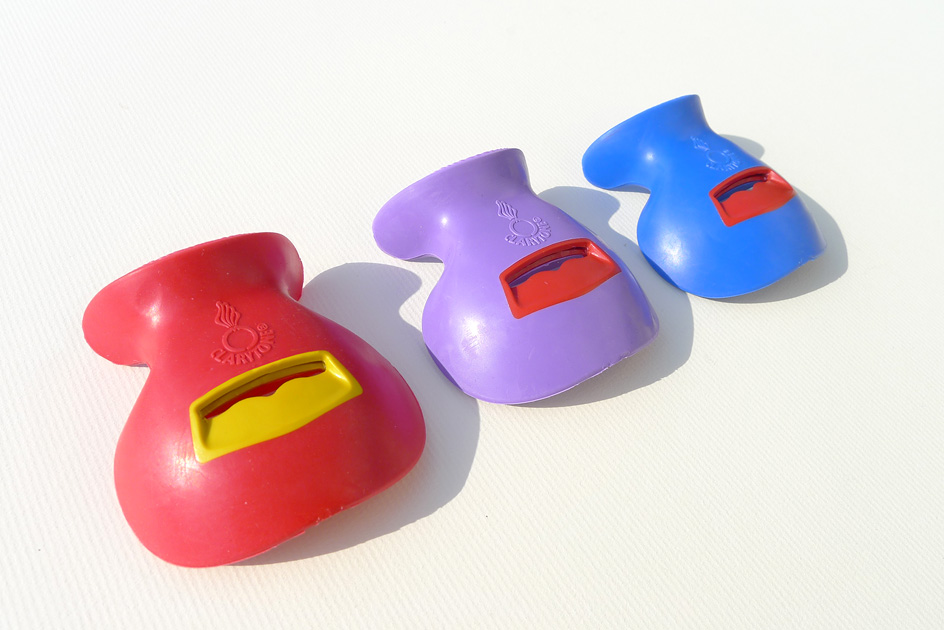
The colour choice was not easy to make, so I decided to try a fruit colour scheme.
Here are the proposed colours:
 Intermediate renderings for the colour chart:
NFO:
Intermediate renderings for the colour chart:
NFO:
When will they be released and available to the public ?
CS:
I already have some that are available to the public but they are not perfect. There are still a few issues with production and the moulds.
As you will notice on the instruments I sent you, there are flashes of plastic on the edges where the mould shut off surfaces are. You will also notice that there is a problem with the injection point, which will probably have to be moved.
The over-mould material (TPE) is also an issue -- I have to find the correct one that will chemically bond with ABS plastic and it must be:
·Food Safe
·Odourless
·Smooth, not sticky or tacky (good haptics)
·Colourable
·Affordable
·Shore 60-70 hardness
·Hopefully available in South Africa
I have already tested 5 different grades of TPE and only one of them is silky smooth -- but it is relatively expensive because it has FDA (Food and Drug Administration) approval.
I plan to test a Urethane Based TPE within a week or two.
Production can be finalised once I have decided on a over-mould material and once the mould has been modified.
NFO:
Will the regular Bocarina® still be produced ?
CS:
Yes the 'old' Bocarina
® is still going to be produced. Its popularity is growing, especially in Japan. Furthermore, the 'old' Bocarina
® is easier to play and is well suited for beginners.
NFO:
Thank you a lot, Chris! Now, we're all impatient to see this new nose flute available on the retail market!
---
Related links :
-
The Bocarina® Pro - Part I : A new star is born !
-
The Bocarina® Pro - Part IIa : Reviews
-
The Bocarina® Pro - Part IIb : Reviews
-
The Bocarina® Pro - Part III : Prototypes
-
The Bocarina® Pro - Part IV : Interview
-
The Bocarina® Pro - Part V : Ceramics
---