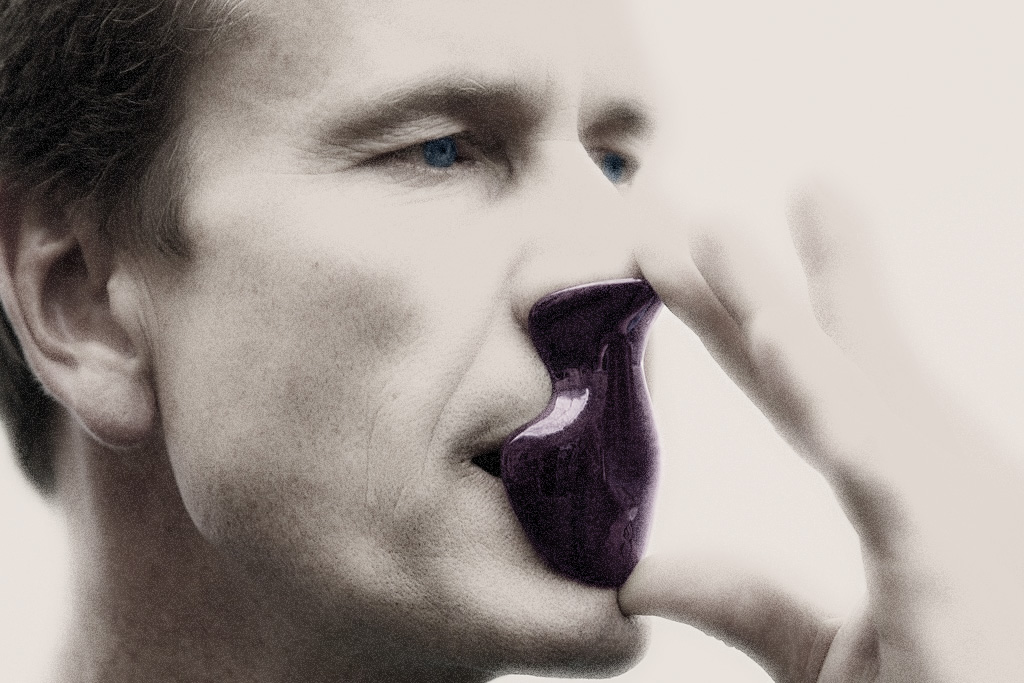
This blog is dedicated to the sublime instruments called nose flutes and which produce the most divine sound ever. We have chosen to discard all the native models from S. Pacific and Asia, for they need fingering to be played. We'll concentrate on "buccal cavity driven" nose flutes : the well patented and trademarked metal or plastic ones, plus, by a condemnable indulgence, some wooden craft or home-made productions.
Showing posts with label South Africa. Show all posts

Feb 12, 2023

Rest in peace, dear Chris...

Dear nosefluters, we have a very sad news to share. Mr. Chris Schuermans passed away on 3rd of February in Pretoria (RSA), after a long illness, that he faced with courage and against which he fought like a lion. Chris was a very good friend of us, at Noseflute.org, and we mourn for his loss with all our heart.
 
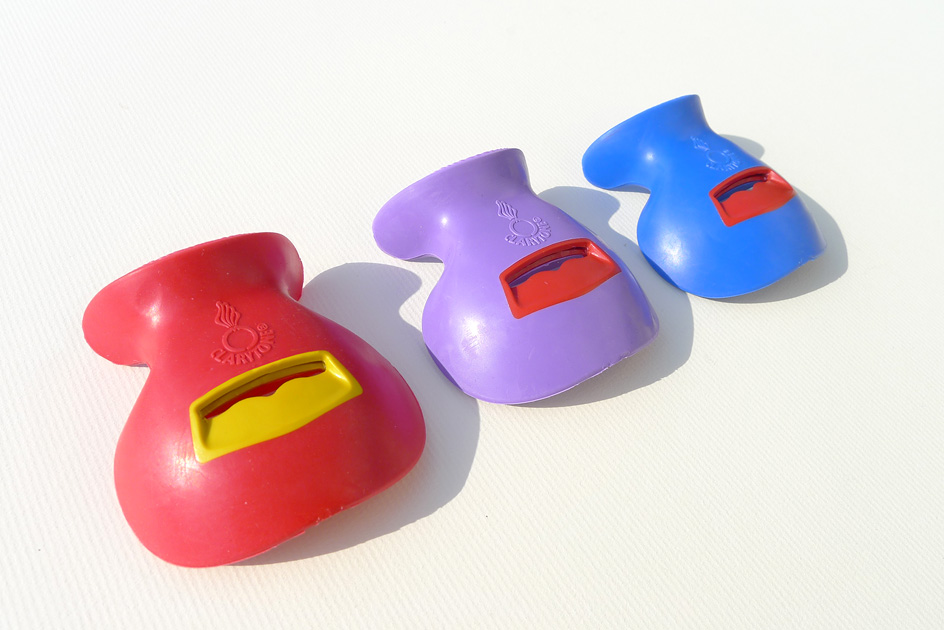
Chris Schuermans was the designer and producer of the Bocarina® nose flute, among other instruments. He began with clay models in the early 2000s, named Clarytone®, which reached only a local market. But in 2011, after a huge work on the design and the fluid mechanics (including testing the shape with a wind tunnel modelization software), Chris launched the Bocarina®, which quickly became available in the USA, Europe and Japan : a beautiful, sturdy and easy-to-play, yet musically efficient and powerful instrument was accessible for several Dollars. The Bocarina® was indeed a high standard manufactured instrument, and has remained since the only nose flute with such capabilities in that range of prices.
 
Clarytones :

Bocarinas (Regular (in ABS) and early batches (in Polypropylene) :

Clay and ceramic Bocarinas :

Bocarinas experiments and "Glow in the dark" models :

 
Chris Schuermans could have stopped there, but he followed his researches on, and in 2016 began the production of the Bocarina Pro®. The goal was to make an instrument in soft plastics, with the purpose of adapting to different types of noses and physiognomies. More, he designed a very new kind of fipple, with a wavy shape in order to expand the ambitus. Chris managed with a hard ABS "technical insert" (the wind way and fipple piece) inset into a soft body (nose hood and mouth shield). The global pitch was a bit higher and the nose flute a bit more tricky to manage, but above all, the manufacturing process was not satisfying (not fully reliable and expensive). That Bocarina® II didn't convince as did the regular model.
 

The Bocarina® Pro and its incredible fipple :

 
But Chris carried on, learning from mistakes. Trying 3D printing, 5-axis CNC routing, designing new prototypes and testing different materials, natural and synthetic wood, or rare and expensive other ones imported from different parts of the world. Chris, always very generous, sent us (The Nosy Diva and me) many of those rarities, and some sit among our very best nose flutes. For sure, these would have been too expensive to be mass produced. They were experimental objects dedicated to knowledge improvement.
 

Natural wood and Chemical wood (Necuron 651) :

 
On the ceramics side, Mr. Schuermans designed moulds to press clay, not necessarily to produce ceramic Bocarina® in a wide number, but to ensure a regular quality. I don't know exactly how many different models were made in his workshop, but one day he had sent me another ceramic prototype (which plays wonderfully!), I asked him which one it was, and Chris answered to me : "this one should be Bocarina shape #7 or #8, I guess". Not many, but around a hundred or two of the clay Bocarinas (different shapes) reached the market, mainly in Japan (plus Chris' local one in RSA).
 

Different shapes of ceramic Bocarinas :

 
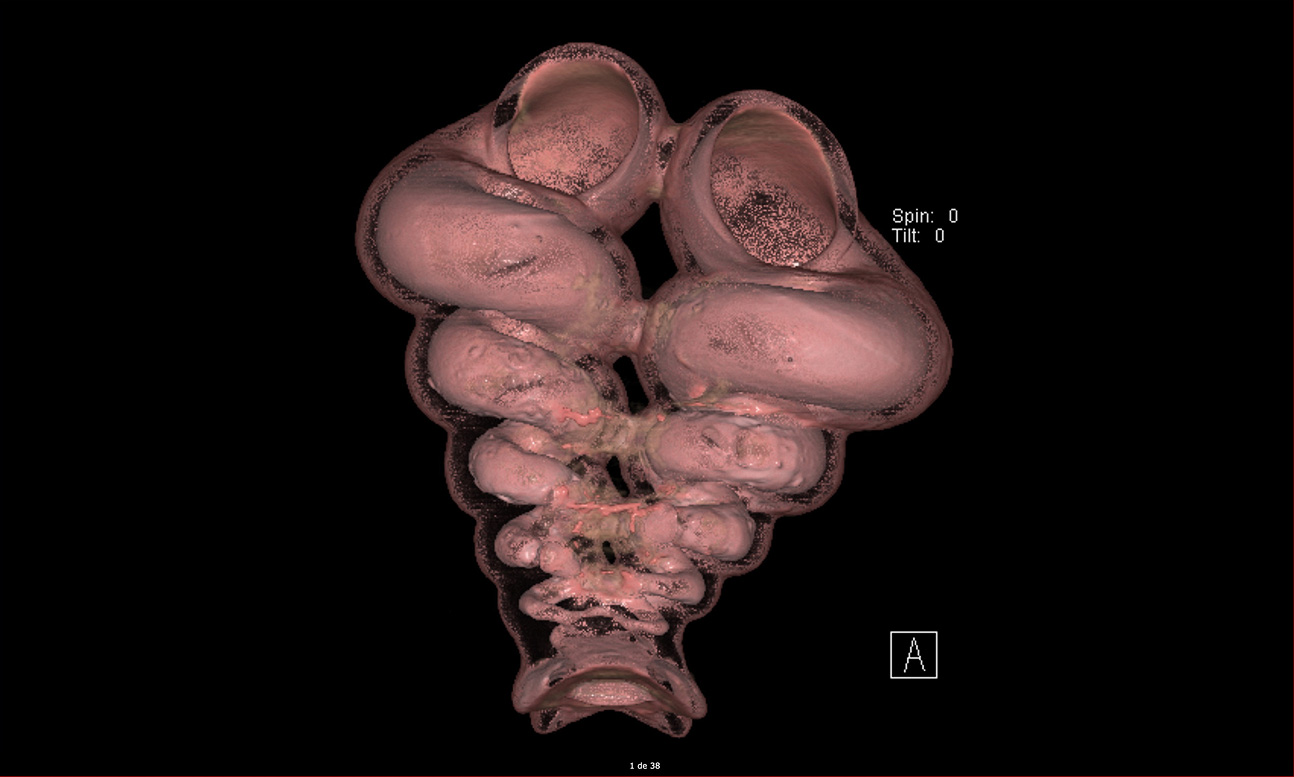
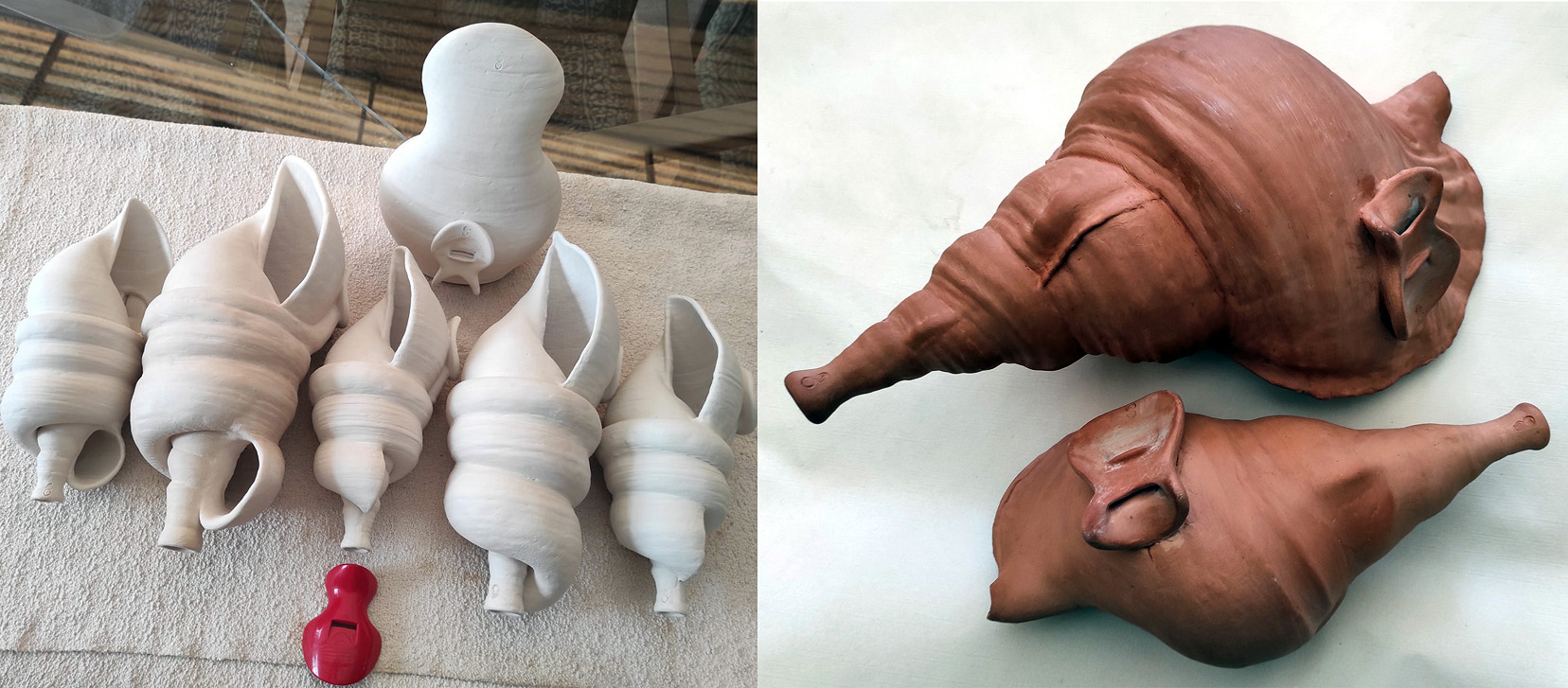
But that was not all. Already ill and sometimes very weak, Chris Schuermans had the idea to use the shape of a conch to amplify the nose flute voice. Progressing with "miss and hit", fails and wins, Chris built several prototypes, firstly from (medical) scans of real shells, then by CAD-designing a perfect shape according to acoustics. We suggested to call those "Concharinas", which name Chris adopted. He also wanted to produce some of them in ceramics, but the task revealed very difficult (too many cracks after firing the clay) but not impossible, since he managed to craft successfully some of them. Chris' strength was vanishing away, but our gentle and kind yet... stubborn friend kept on working on the Concharinas with all his heart between his stays at the hospital.
 

Medical scans of Concharinas :

Raw clay and glazed ceramics :
 
Chris' last project is a 3D printed shell-bodied violin, which he had just the time to complete. The "Conchiolin" ?
 

The Conchiolin :
 
Chris Schuermans' legacy to the nose flute world is huge. He simply re-invented the instrument with a high-tech approach, a real sense of aesthetics and a true and talented craftsmanship. More, he succeeded in manufacturing, ensuring a reliable and regular quality, making professional instruments accessible to anyboby. Chris Schuermans was a true Master, and has been inducted to The Nose Flute Hall of Fame, in the 'Producers' section, at the highest level.
 
---
 
We will terribly miss our friend Chris. We had incredibly interesting talks with him, and funny ones too. He was a kind gentleman and a very sharp mind. We address our deepest condolences and warmest thoughts to his family, particularly to his brother Lodewyk and his children.
 

Apr 27, 2016

Nose Flutes and 3D Printing!

3D printers, 5 axis CNC mills, 3D scanners, laser cutters... All these high and new tech machines are more and more becoming parts of our environment and common ways of production (at least for prototypes or unique pieces). And... what about nose flutes ?

The plastic Humanatones and Schwans were born too long ago to have gotten the benefit of a computer-improved design. Which were the first nose flutes designed, improved, tested, produced or even reproduced by new technologies?


2008/2009, then 2013/2014: The Bocarina®

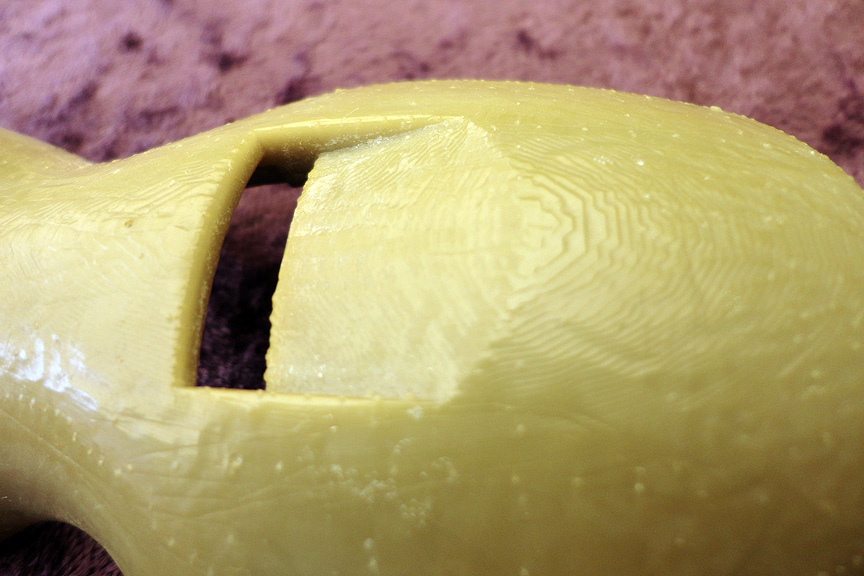
Chris Schuermans is probably the first having had a nose flute printed. He designed the Bocarina® with 3D softwares, then used 3D printers to test different shapes.

First 3D print grown in a Stratasys Dimension machine using FDM (fused deposi1on modelling) from ABS filament:

Very creative, Chris designed then a Bocarina® body able to receive inserts, in order to test different fipple shapes: « I then experimented with this design - and realised that it was too expensive to grow the whole Bocarinas each time.... So I designed the airways to snap into the body »

« Then I made some enlarged models for making ceramic moulds », wrote Chris:


« I experimented with clay Bocarinas and changed the design. »:


Experiments with the new design:

« Using the refined shape I enlarged the model to make a model for making a ceramic mould. This print was also made in a Stratasys Dimension machine using FDM (fused deposi1on modelling) from coloured ABS filament. This model was polished with sand paper. »:


« After conducting some more experiments with clay I refined the fipple and finalised the design to make the final prototype in an EnvisionTEC technologies machine using SLA (selective laser acrylic) with photo-sensi1ve resin » (see below).
« The Bocarina mould was made using the CAD data of the 3D model used for this 3D print. ».

As you can see, the design process has not been an easy and sweet path...


And as you can see in this post, a whole process began again some short years aftermath, with the Bocarina® Pro...

 
2010: The Pfaff Nasenpfeife

The patent for the Pfaff Nasenpfeife was filed in May 2010, and I assume this model was tested with 3D printing (in 2009?), but I do not have any evidence of it.


2012: Fuppi

Fuppi, the Japanese mass produced plastic hanabue, was born in 2014, but prototypes had already been made at the end of 2012 (see this post). The original model was the Adachi nose flute designed by master Kunio Katada, Fuppi's two parts mould and its inner design (with the purpose of being openable for cleaning) was, without any doubt, created on a computer. It's more than likely that first Fuppi prototypes were 3D printed (particularly in this hi-tech country).


2014-03: CRAI at ENSA Nancy

Here, we are not dealing with the design of a new nose flute, but with a joke/training/experiment lead by some of my former students. After their studies at Nancy (FR) National School of Architecture, some of them integrated the CRAI (our lab specialized in modelization). There, they had access to 3D scanners, 3D printers, etc. As a training with those hi-tech tools, they decided to copy a Bocarina® (sorry Chris... I wasn't aware of those funny pirates at the time...), in order to modelize it and be able to personalize it and make a surprise for me. I assume they wanted to recreate the external shield as a human face. Unfortunately, most of them left the lab before the achievement of this funny project. Anyway, Julien M., still there while completing his PhD., sent me the remaining files:


The toolpath vizualization:


2015-03: Nose Flute by Mark Brocklebank

March 2015 is the first (known) date for a home designed and 3D printed nose flute. I found it on Thingiverse, the 3D printing open community. The Mark Brocklebank's nose flute is very simple, basic and coarsely printed, but it works! His creator even posted a video on his YT channel:


One interesting feature, on Thingiverse, is that what is published is offered to the community. So, anyone can download the files and make a home printed version of the object. That's what did two people, who also published a picture of their own "make"… Same file, but different printer and plastics:


2015-05/06: Nose Flutes by Maikel Mei

in May 2015, Maikel Mei sent me an email with pictures: « I have been working on the design of a 3D-printed nose flute. Today I collected the 3rd batch of the experiment, of which this is the most successful. It works, yet is far from perfect. It was printed in PLA. The proper version will be first printed in nylon in one piece. I am also thinking of liquid wood etc. The design is a combination of the W&L flute together with my own ideas and holds several innovations such as the extended chin shield and the reed holder. »

It's very interesting: Maikel Mei chose to print a 2 parts nose flute, longitudinally and symmetrically cut!:


The next month, Maikel had made a 3D printed copy of his silver Schwan-shaped Nasenflöte: « A new maker made a 3D-replica of my silver W&L. It contains a few tweaks that should make it a better instrument when printed in metal or ceramics. I will go for another few tweaks next week that will make it the best possible instrument. The print in the pictures was made in an hour from bronze ABS-string, just to have a result. Even without a proper labium it works nicely, better than the ones made by the first maker! »

Sadly, one side is not as clean as the other...


2015-11: Nose Whistle by Bob Taylor

Another nose flute appeared on Thingiverse last November. Bob Taylor designed and published this (more than) simple nose flute, but there is no picture of a 3D printed instrument, so we don't know if it was realized for real. Anyway, it would not have been able to whistle, having no air way!!!


--

Who's next ?