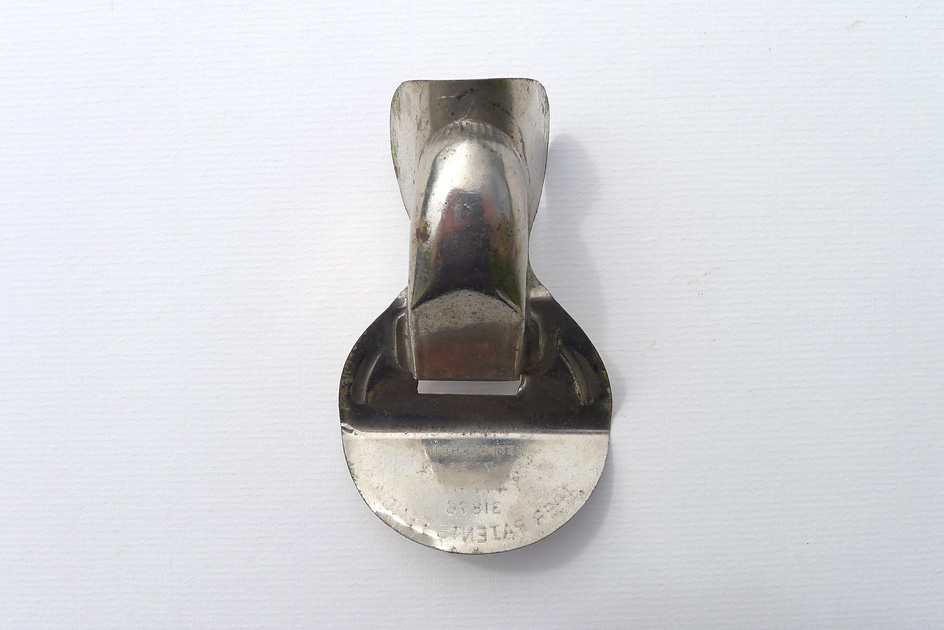
This blog is dedicated to the sublime instruments called nose flutes and which produce the most divine sound ever. We have chosen to discard all the native models from S. Pacific and Asia, for they need fingering to be played. We'll concentrate on "buccal cavity driven" nose flutes : the well patented and trademarked metal or plastic ones, plus, by a condemnable indulgence, some wooden craft or home-made productions.
Showing posts with label drawings and paintings. Show all posts
Showing posts with label drawings and paintings. Show all posts
That's one small step for mankind, one giant leap in luxury for NoseFlute.Org: a dry seal to authenticate any of our (so numerous) paper communications!
Each year, I begin the design courses I give in an engineer school by asking the students to "invent the nose flute", without pronouncing its name. They come from many countries (this year: Brazil, Argentina, Algeria, Tunisia, Uzbekistan, Germany and a few from France) but they don't know nose flutes.
I expose how a whiste blows, explain that we could get a variable tonality if we'd replace the chamber by one that could inflate or deflate. I suggest the mouth to play this role, and thus, the nose breath to blow instead of the mouth. I ask them to invent an object that could whistle this way, and to point some attention on ergonomics.
Most of the students are not confortable with hand drawing, and the results are sometimes funny, or difficult to understand. However, some propositions are interesting because they help to understand ... nose flute shape history!
As virgin in matter of nose flute, they know neither the vintage nor the modern shapes. But some of their drawings look very similar to shapes *we* know well!
Many of them feel the need of preventing air leaks and choose either nostril plugs (like the Kunimaru) or a nose hood (like the Nasalette). Some – sometimes the same – design an insert for the mouth (like the Nasalette and the Couchois' whistle). Also, some students feel the need of a handsfree instrument, and generally resort to a band that joins the ears, exactly as William Carter did with the Nasalette.
It's also interesting that most of the students drew a nose flute looking like a torture – or at least medical – device, and seem not to imagine it could be a funny musical instrument that give pleasure to to player and (sometimes) to the audience.
Some nose flute that wouldn't work...
Some nose flute that would possibly work with minor changes...
My prefered one, which doesn't look like a medical device. It looks very alike a plastic Humanatone, to which a heel handle would have been added:
Next week, I'll show them several nose flutes, and play a bit, to prove it can be a elegant, simple, funny and powerful instrument.
--------
[EDIT] : After having read this post, Mr. Ken Tanaka (see this post) quickly made a paper nose flute according to the model drawn by one of our students (the last picture). Here is the pieces he assembled, and the short video:
To fish a Snoot-Flute was a quest. Do you remember the highly desirable Snoot-Flute, kind of a Nosy Grail for the nose flute collector ?... We had published the beautiful advertisement (see here) which was published in the Kenner toy catalog. We also had written a long article about Nelson Ronsheim (NFHoF), its funny and creative inventor (see here)…
---
Well, we just were incredibly joyful when we recently found a Snoot-Flute!
It was very dirty and the cardboard was a wreck, having enormous moist blotches. I cleaned it a bit with a soft eraser, tried with diluted Hydrogen peroxide, but was not able to get the brown blotches to a lighter color. So, I just passed it a minute over steam, then carefully ironed it. Too bad that this card is so damaged, the design by Nelson Ronsheim is so great...
1.- The Cardboard
The design is tremendous, very vintage, with its oblique lines separating colored areas. Many of the typographics were hand drawn, including the adorable big logo. Here is a scan of my board. But I didn't resist providing also a 'digitally restored' version (yes yes, some work again:), to show how the paper should have looked when still new:
The first thing I noticed gave me an 'official' answer to the question of the date. I thought the Snoot-Flute was dating of the early 1960s, and a reader of this blog then posted a comment asserting « that is a page from the 1963 Kenner catalog. It's not in the '62 or '64 catalogs so it looks like it only lasted a year.». It would need some investigation to check if the Snoot-Flute ad really appeared in the 1963 catalog then, and above all, in other vintages. But... One thing is now sure and ascertained, the Snoot-Flute dates of 1959!!
The 'Pats. Pend.' should never have been registered, since I never found any traces of them and the date is not so far to have disappeared from the patent office.
Indeed, this part of the cardboard was totally unknown to me. The only picture I had was the catalog advertisement which showed the nose flute clipped on the paper, masking this essential info. Then, Mr. Michael Smith (Nelson Ronsheim's grandson) had sent me the only picture he had, and there again, the flute was clipped on the board (there).
By the way, please note the differences (colors, text, oblique lines) between the cardboard design on the catalog ad and the one that was actually printed:
Another nice surprise was to discover the user manual, announced by the mention 'Directions underneath', but also masked by the flute. I was surprised to read « To play different notes, breathe harder or softer » which is only really true associated with « and change the shape of your lips. » I think it is the very first time I read this advice in a nose flute instructions sheet.
Also hidden under the Snoot-Flute, a nice little drawing:
2.- The Nose Flute
On that topic also — the instrument by itself – a great mystery was still laying: on the catalog ad and on Michael Smith's picture, as well as on the pictures of the advertisement I got the Snoot-Flute from, the flute is displayed reversed side, showing its back only. How was the front ? The only design that was helpful for imagination was the one on the cardboard with the kid playing: rather flat front on its top part...
Have you seen how ugly it is ?? Hahaha! That was my first surprise when I open the parcel I received. The front of the flute is never shown, because it looks horrible! Very funny, and I love this flute even more. Have you seen the very crappy and distended yellow plastic sheet covering the front?
The second thing that surprised me is that, I was expecting a sturdy and thick plastic nose flute, and I got the lightest instrument. Among the plastic nose flutes, it is the lightest I know, even lighter that the Humanatone (3g) that is much smaller. The Snoot-Flute weight 2.5 grams!!
In fact, this nose flute is really clever. The plastic is very thin… because the Snoot-Flute was produced by thermoforming! Not injected plastic. As you know, the thermoforming uses a hot shape upon which is placed a sheet of thin plastic, while vacuum is produced in order to stick down the sheet and form it according to the shape. It is the only nose flute I know made this way. This explain why the front is so flat. The (red) bottom was thermoformed and at the same time the (yellow) flat top was superposed and glued by fusion on its sides. I suppose that it is at this very moment that this softened (yellow) part got a bit bulged (Some air was probably blown into the nose intake, to avoid the yellow sheet to stick the red one).
There are still some embossed points visible on the red part: the points where ejection pushrods did their work. There are 3 pairs of them (top, middle, bottom). If you take a look, they are also visible on the Michael Smith's picture, as well as the bizarre kind-of-boomerang shape. But this weird shape is not at the same place on both flutes, and it should be a mark made from but after ejection:
Oh! The sound? Well the sound quality is not so bad and quite powerful, just a bit sqwacking in the sharps:
---
Don't you think it looks much like a...
---
Now, let just make a fake picture, just for the pleasure of looking at a mint Snoot-Flute:
I found another vintage Humanatone, with its box and paper, in very good shape. It's a nickeled No.20, but is interesting at least on one point: it features a specific detail that I had never seen before on a Humanatone...
1.- The Box
The box is a very classic Humanatone box, with the beautiful typographics and the Stivers' lion design (dating of 1905) that we found to be a rebus (see here). In this version, the label is anthracite and the cardboard box brick.
Here it is, compared to the two other similar ones we know:
As you can see, the label is dark grey as the one of the bottom left pictures, which belongs to an instrument we dated between 1908 and 1911 (check here). But the label shows the 'style' and the $1.00 price, like the box in the third picture. The nose flute itself has got rectangular flaps - like the one related to the 3rd pic. - while the 1908-11 has 'end of ice cream stick' shaped ones. So, our new classic 'Hum' could be an in-between model (?).
2.- The Manual
The user manual is very similar to the one of the 1908-11 Humanatone, besides it is printed on bistre color paper, and has a back also printed.
Compared to the older one, the header typographics have slightly evolved, but it is mostly the bottom of the page that is different, with a new design for the trademark Humanatone, the place 'New York' instead of the street address, and the presence of a nose flute:
The details are more finely printed too:
The back of the page is rather funny, with advertisements promoting a book with an hilarious title ('The Bright Side of Kissing and the Dark Side')...
… and another one ('Flashlights on Human Nature'), but also a bunch of soaps, balms, emulsions and unguents to be (or stay) the most healthiest and attractive person. Prepare for kissing, courting, calling!
I was astonished how the man of the advertisement looks very alike David Crosby 'Almost Cut My Hair'!:
3.- The Nose Flute
The instrument itself is a beautiful classic nickeled Humanatone specimen, with rectangular lateral flaps (rather early production).
As said earlier, and as you can see it, there is a unique detail on this Humanatone, that I never saw before: It is a pair of embossed circular arcs, dedicated to strengthen the mouth shield. The only comparable feature, but as a full circle, can be seen on the Wunderflöte drawn in 1941 Wolfe's book and visible among Piet Visser's collection:
Now, here is our Humanatone:
As I'm certain this nose flute is not part of the super early production, nor the late one, it means that the 'strength bow' appeared on, then disappeared from the Humanatone. My opinion is that this features didn't last so long, as it is the very first and only time I saw it.