Groth Music just made a very funny video to launch the Bocarina™, newly added to their catalogue :

Jan 28, 2012


Jan 25, 2012
Home made, made with a knife !
A new video has appeared, presenting a nose flute made out of a small chunk of wood with a knife. It's an illustration of the different objects proposed to be done with a knife in a Swiss book called "Werken mit dem Taschenmesser" ("Handicraft with a pocket knife"), and sponsored by Victorinox, the famous Swiss army knives maker. The result is interesting, but doesn't seem to project a great and loud sound ...
Jan 22, 2012
Why do we spend some time making this blog ?
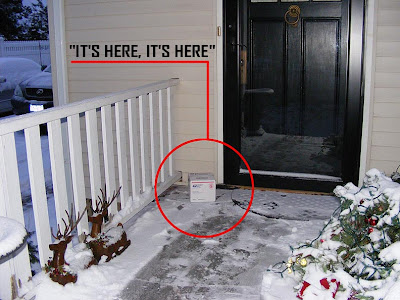
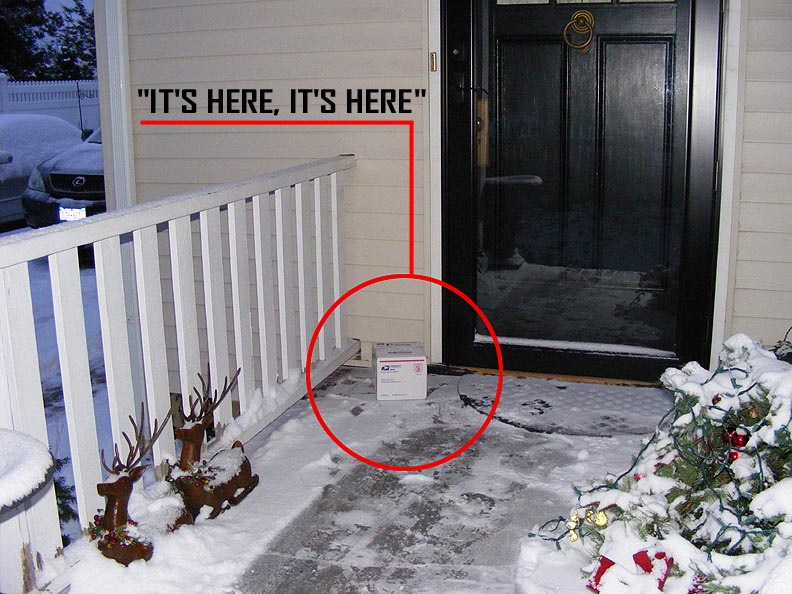
The answer is probably here! Brian F., long time nose flute lover from Long Island, was so excited to received the Bocarinas™ he had ordered, that he sent me an email with pictures of the parcel waiting for him, in front of his door!
We wish Brian long hours of pleasure, and hope to see some videos soon!
Note to our readers : Noseflute.org freely supports the Bocarina™ for it is the best plastic nose flute we ever played and also in the goal to help a talented craftsman the best we can, but this blog has absolutely no commercial implication in the business (no commercial implications in any nose flute business : Noseflute.org is purely a free observant, with opinions.)

We wish Brian long hours of pleasure, and hope to see some videos soon!
Note to our readers : Noseflute.org freely supports the Bocarina™ for it is the best plastic nose flute we ever played and also in the goal to help a talented craftsman the best we can, but this blog has absolutely no commercial implication in the business (no commercial implications in any nose flute business : Noseflute.org is purely a free observant, with opinions.)

Jan 20, 2012
Lloyd Buford Threlkeld, a Pioneer
Lloyd Buford Threlkeld was a guitarist and a singer, born in Eminence, KY. He moved to Louisville in 1915 and there, took the stage name Whistler, began playing the nose flute, and formed a jug band (the famous jug bands of Louisville were bands mixing traditional instruments with ordinary objects transformed into instruments, including jugs).
The band was formed by :
Willie Black, Banjo
Jess Ferguson, Violin
Luther Nichols Violin
B. D. Tite, Jug
Rudolph Thompson, Jug
Whistler aka Buford Threlkeld, Guitar, nose whistle, vocals
James Watts, Vocals

According to sundayblues.org, « Whistler and His Jug Band was a long-lasting and popular group that recorded for several labels from the mid-'20s through the early '30s, and influenced many of the jug bands that followed. The group was formed in 1915 in Louisville, KY by guitarist, vocalist and whistler Buford Threlkeld. The band first entered the recording studios in September 1924 when they traveled to Richmond, IN to cut several sides for the Gennett label. The second recording trip for Whistler & His Jug Band took them to St. Louis in April 1927. On this trip, the jug band recorded 10 songs for Okeh. In June, 1931the band got to record in their hometown of Louisville ».
 (Illustration by R. Crumb)
Here are some stunning examples of Threlkel's nosey talent :
Jerry O'Mine (Whistler), 9-25-1924, Richmond, Indiana, Gennett 5554-B :
Jug Band Special, 4-29-1927, St. Louis, Missouri, Okeh 8816.
(nose flute solo starting at 1'44) :
Low Down Blues (Eubie Blake / Noble Sissle), 4-29-1927, St. Louis, Missouri, Okeh 8469.
(nose flute solo starting at 0'56) :
But more! There is a gorgeous movie footage, let's dare to say a music clip, of Whistler and his Jug Band. Unfortunately "sans nose flute", but stunning anyway, with three jug-men!
Big thanks to Uncle Emile for having stressed my attention on those jewels!
---
Jan 18, 2012
Videos : Hanabue114, a great showman !
Hanabue114 is a very productive Japanese noseflutist. He put online no less than 18 videos on his YouTube channel in just a bit more than one month.
Hanabue114 is not a master like Mosurin, but is the noseflutist the most joyful and expressive I know on the web. Any video by him is a sincere pleasure to watch at, because this player share his own pleasure and deep involvement in playing. He likes to salute his remote public with a Japanese bending, and then to enter a dance.
He works on the framing of the video shooting, plays with the light, and chooses stunning backgrounds, like black-light reactive or super-psychedelic wallpapers.
Hanabue114 just released a 6 Disco videos series.
We display here just a few videos, but we really invite you to watch to all of his production.
Jan 17, 2012
Hum-a-Tune : different colors
We already presented the Hum-a-Tune in this blog. The basic version of this low-grade Humanatone copy first, here, and the branded Bullwinkle's version there.
Since, we found other representants of this Hong-Kong 1970's production. We discovered the range of colors proposed to the public, and also, that there had been at least 2 different versions of the packaging.
Some pictures of the babies :

And here is a comparison between the two different typos I noticed on the packaging, one printed in vermillion/dark blue, and the other carmine/black :

Which one was the first ? I don't know, but I assume that the blue typo was later than the black one, because the front design is more realized, more compact, and that the mispelling ("nostrile") has been corrected.
---
On a similar topic :
- Hum-a-Tune : a vintage low grade copy
- Hum-a-Tune : different colors
- Bullwinkle's Hum-a-Tune and Humanatone
- Humanatone copy from 1997
---
Since, we found other representants of this Hong-Kong 1970's production. We discovered the range of colors proposed to the public, and also, that there had been at least 2 different versions of the packaging.
Some pictures of the babies :

 |  |

 |  |
 |  |
---
On a similar topic :
- Hum-a-Tune : a vintage low grade copy
- Hum-a-Tune : different colors
- Bullwinkle's Hum-a-Tune and Humanatone
- Humanatone copy from 1997
---
Jan 16, 2012
Video : The Celery Nose Flute
There is currently a huge buzz on Twitter and other networks about this video. Its author, the Japanese Heita3 is not a newcomer in vegetable instruments crafting ... and already did a lot of stunning and funny videos with them. His last creation is a celery nose flute.
Jan 15, 2012
Bocarina™ : Lucky America!
Since the Bocarina™ reviews and the Chris Schuerman's interview we published here, here , here and here, some people showed they were interested in getting this hi-end plastic nose flute.
It was a bit difficult, due to huge postage fees and ... delivery hazards from South Africa.
Noseflute.org is very glad to announce that the Bocarinas™ are now distributed in the USA, and can be ordered from a online shop !
Mr. Al Hager of Groth Music proposes the Bocarinas™ in 3 colors - black, blue or red - for a very attractive retail price ($6.95 +s/h). And Groth Music proposes to send all over the world...
So, if you are interested, here is the link : Groth Music Company

Jan 13, 2012
YW, Taiwanese amateur builder
Chiou Shuen-Ping, known on the web as YW, is a graphic designer from Taïwan (Republic of China) and an amateur nose flutes craftsman. He notably creates wooden flutes with a curious and clever technique, cutting and gluing a pile of small sheets of wood.
YW kindly sent me one of his cute creations, and I asked him some questions.

---
YW : I'm from Taipei, Taiwan (R.O.C.). A small island country in Asia. My name is “Chiou, shuen-ping”(邱舜平), and I often use the nickname ”YW” on the web and signature. I am a graphic designer and I love to make crafts in spare time. Before I started playing noseflute, I often play chromatic harmonica.
I started to play the noseflute in almost end of last year (November of 2010).
Some day of last year, I saw the Japanese master "Mosurin" play a kind of small noseflute in the news on TV. That was very interesting and turned me curious of it, because I love to make crafts and play harmonica. So the mini, simple and elegant musical instrument, as the noseflute is, attracted my attention.
In Taiwan, the indigenous people play a traditional kind of double-barreled noseflute (when we talked about the nose flutes in Taiwan, most people usually think of the traditional double-barreled nose flute) . But almost no people play and sale this kind of small nose flute, so I have tried to hand-make some by myself.
I make the nose flutes by paper birch stick, just use one knife and quick adhesive, never use any machine nor sanding paper (I sand the flutes with the old method, using autumn leaves to grind).
My complete tool set for making nose flutes :

I staggered overlapping layers of birch paper to build noseflute (like a sandwich). With this manufacturing method, I can reserve airway, window and wedge during manufacturing process. And the airway can have the same size at every time. Because I only use one knife to make noseflute, this is a more convenient way to me.
Taiwan is a very humid place. So when I did a nose flute, I always integrate vegetable oil for a few days maintenance (usually soaked about a week). The color of nose flute becomes dark and the density gets higher.
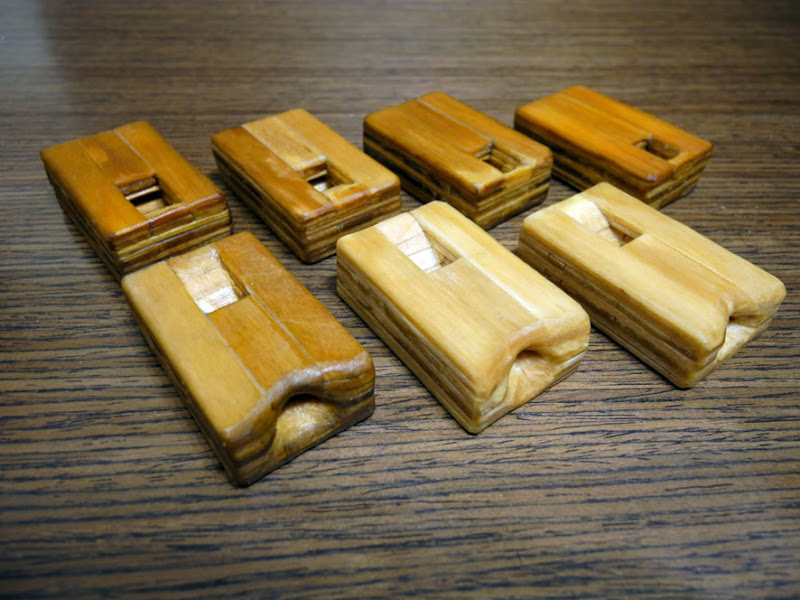
I only made two painted nose flutes. It was the first two test-products.
In addition, when I saw the news of master Mosurin on TV, the news didn’t introduce the magical theory of nose flute.
So I just tried to guess the theory of nose flute, and searched for relevant information on the web (some websites about nose flute, some about ocarina, some about recorder), and anxious to find materials to test.
Then I found a small irregular wood waste near my home. Irregular wood is not good enough, has a rough surface and a low density. So, I only made two, and tried to paint them with acrylic painting and some glue, to allow smooth surface (and also let it not break easily). I painted them similar to aboriginal totem designs.
A few months later, I changed their paintings again, hardening their surface.

For those first two test-products, I used a knife to carve a single piece of wood. It was very difficult to make it, and I prefer the original texture and color of wood. Therefore, after I made the two noseflute, I found a new way to build my nose flutes, using staggered overlapping layers of birch sheets.

---
YW's nose flute in photos
The object is very cute and funny. This nose flute is very very small (6 x 3 cm) and has almost perfectly identical faces, the nose notch excepted, plus the color of the duct cover piece (lighter on the front side).

---
You can visit YW's blog here, with some pages dedicated to his nose flutes, and some thoughts about nose flutes in general.
---
YW kindly sent me one of his cute creations, and I asked him some questions.

---
Noseflute.org : Who are you, YW ?
YW : I'm from Taipei, Taiwan (R.O.C.). A small island country in Asia. My name is “Chiou, shuen-ping”(邱舜平), and I often use the nickname ”YW” on the web and signature. I am a graphic designer and I love to make crafts in spare time. Before I started playing noseflute, I often play chromatic harmonica.
When did you begin to play the nose flute ?
I started to play the noseflute in almost end of last year (November of 2010).
How did you discover this instrument ?
Some day of last year, I saw the Japanese master "Mosurin" play a kind of small noseflute in the news on TV. That was very interesting and turned me curious of it, because I love to make crafts and play harmonica. So the mini, simple and elegant musical instrument, as the noseflute is, attracted my attention.
How did you decide to make nose flutes ?
In Taiwan, the indigenous people play a traditional kind of double-barreled noseflute (when we talked about the nose flutes in Taiwan, most people usually think of the traditional double-barreled nose flute) . But almost no people play and sale this kind of small nose flute, so I have tried to hand-make some by myself.
How do you proceed to make a nose flute ?
I make the nose flutes by paper birch stick, just use one knife and quick adhesive, never use any machine nor sanding paper (I sand the flutes with the old method, using autumn leaves to grind).
My complete tool set for making nose flutes :

I staggered overlapping layers of birch paper to build noseflute (like a sandwich). With this manufacturing method, I can reserve airway, window and wedge during manufacturing process. And the airway can have the same size at every time. Because I only use one knife to make noseflute, this is a more convenient way to me.
Taiwan is a very humid place. So when I did a nose flute, I always integrate vegetable oil for a few days maintenance (usually soaked about a week). The color of nose flute becomes dark and the density gets higher.

You also made painted nose flutes : can you tell us more about them ?
I only made two painted nose flutes. It was the first two test-products.
In addition, when I saw the news of master Mosurin on TV, the news didn’t introduce the magical theory of nose flute.
So I just tried to guess the theory of nose flute, and searched for relevant information on the web (some websites about nose flute, some about ocarina, some about recorder), and anxious to find materials to test.
Then I found a small irregular wood waste near my home. Irregular wood is not good enough, has a rough surface and a low density. So, I only made two, and tried to paint them with acrylic painting and some glue, to allow smooth surface (and also let it not break easily). I painted them similar to aboriginal totem designs.
A few months later, I changed their paintings again, hardening their surface.

For those first two test-products, I used a knife to carve a single piece of wood. It was very difficult to make it, and I prefer the original texture and color of wood. Therefore, after I made the two noseflute, I found a new way to build my nose flutes, using staggered overlapping layers of birch sheets.

---
YW's nose flute in photos

 |  |
 |  |
 |  |
---
You can visit YW's blog here, with some pages dedicated to his nose flutes, and some thoughts about nose flutes in general.
---
Jan 12, 2012
SARNF : The Return
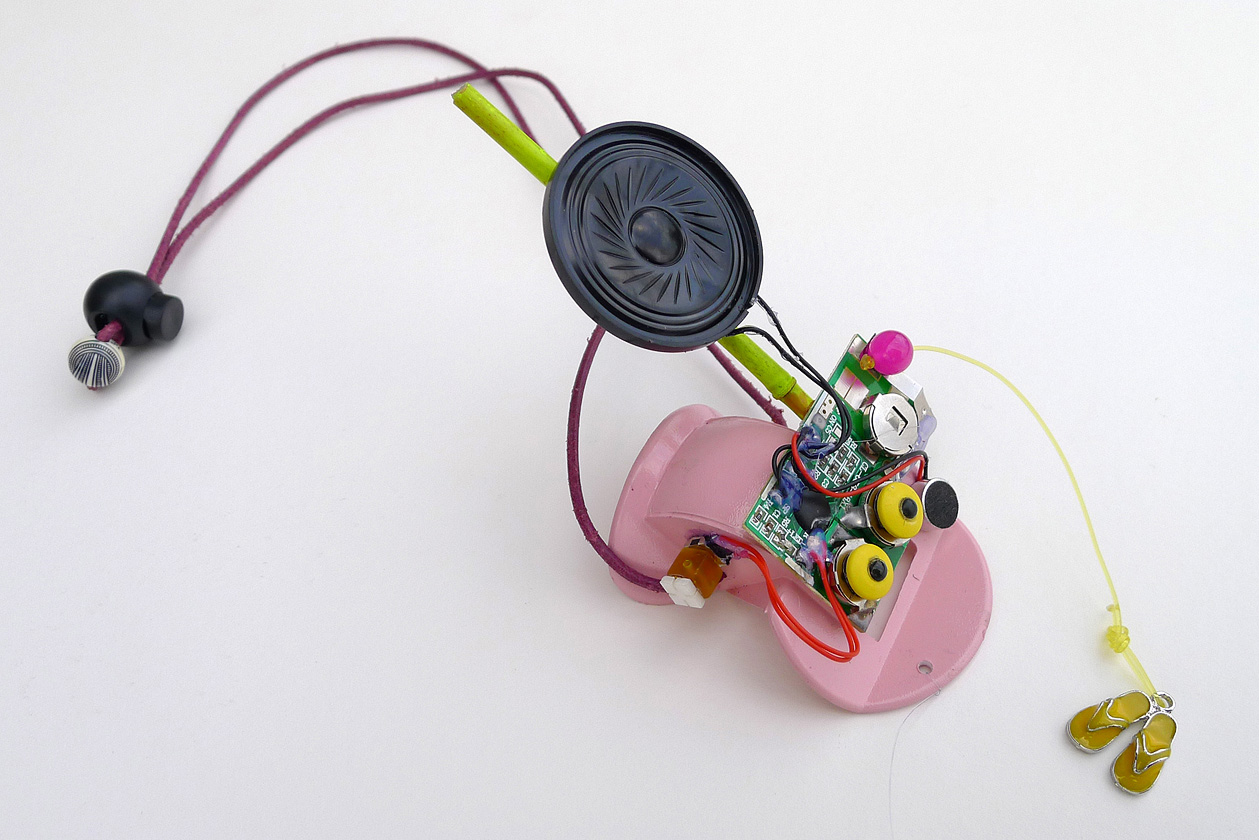
When I built the SARNF (you know, the Stunning Auto-recording Nose Flute), I thought it would stay a unique collector item. Finally, I also built two other versions, the Lady Special, which was a hommage to the Nosy Diva, and the Grand Concert (recognizable by its tiny bow tie), offered to Mister Will Grove-White, famous member of the Ukulele Orchestra of Great Britain, and noseflutist by appointment of Her Majesty, since his gorgeous version of the James Bond theme.
Here is a triptych of the three lucky owners' recolorized and dedicated portraicts (click on the pictures to supersize them) :
---
Here was the Standard Model with its historic presentation video :

--- Here is the Lady Special, accompanied by a video by the Nosy Diva : --- And the Grand Concert model, with its luxury coconut case and personalized monogrammed puller (click on the images to supersize them):


Here is a triptych of the three lucky owners' recolorized and dedicated portraicts (click on the pictures to supersize them) :
 |  |  |
Here was the Standard Model with its historic presentation video :

--- Here is the Lady Special, accompanied by a video by the Nosy Diva :
 |  |

 |  |
 |  |

Jan 7, 2012
Videos : 3 new vids with the Nosy Diva !
One by Feed the Diva!, made in a hurry in a frozen attic, and two nose flute practicing sessions in the Fiat 500, by Miss Birdy! All made in Hannover.
Jan 6, 2012
Show, a Japanese nose flutist
Sho Hirasawa, as known as « Show Nose Flute » on the internet, is a gentle and sympathetic 21 years old very active Japanese musician, website keeper, nose flute collector and amateur builder. He lives in Kobe, and play many kind of nose flutes, from the very common plastic Humanatone to the traditional nasal flutes (Olimong and Ohe Hano Ihu), including his own creations, like stunning gourd flutes.

Show has accepted to answer a short interview. Here it is :
Show Nose Flute : I began to play the nose flute in 2008. I was 18 years old in 2008. I was able to play the nose flute at the first try! I began to play the nose flute from this time.
My sister bought the Human-a-tone for me, at a second hand bookstore "Kasei-no-niwa (mean garden at mars)".
Yes I do! I have performed on stage only in Kansai, Japan, yet. I'm going to perform in other places stages in the future. I have been only playing existing music on stage yet, but I will create music for nose flutes.
I like to play "Lupin the 3rd theme" and "Passionate Continental theme". They were played on my first time stage "Banteki (mean ten thousand woodwinds) expo 2010".
I also played at :
- "Fete de la musique au japon in National Museum of Ethnology 2011" (Osaka, Japan).
I played three type Nose Flutes on this stage. Vietnamese, Human-a-tone, and Olimong. I think i'll perform on this stage in 2012 too.
- "Banteki expo 2010" (Kobe, Japan).
This is an event reserved to woodwinds. I played at lunchtime concert. Worldwide woodwinds players came to this event.
- "the Forest Concert in Nunobiki Herb Garden 2010" (Kobe, Japan).
Many types of musicians came this event. Recorder players, pianists, and more.
Buccal cavity driven type
(It is the main type of nose flutes I use. I can play within a near 4 octave range, and when the conditions are good, a bit over.)
- Vietnamese Nose Flutes
They are the main nose flutes for me, especially the ebony one.
My first vietnamese nose flute was bought at "Koizumi gakki", Kyoto. I have 7 Vietnamese nose flutes now. I think these nose flute have the most effective brake performance. Vietnamese nose flutes are appropriate for playing fast music, I think. They have some character.
- Human-a-tone
I think these nose flutes sound is light, and their blowing feel is soft.
- Nose Flute made in Mie, Japan
It is made by "Nihon Hanabue Kyokai Ise tomo no kai", and we drew it together.
They have 4+ octave range, can afford long blowing, and good brake performance. I think they are appropriate to slow music and majestic music.
- Nose Flute made by Mr.Yatake
I met Mr. Yatake at "Fete de la musique au japon in National Museum of Ethnology 2010". The flute has a 4+ octaves, can perform long blowing, and the feeling is "danceable", because the tone change is very smooth. It is well appropriate to play bright music.
- On-lak Nose Flute
It was made in Thailand, and the Japanese nose flute player Kiyoshi Suzuki fit the crown cap cymbals. It can produce percussions, because of this crown cap cymbals. Its feeling of play is like the Vietnamese one : my On-lak nose flute is a soft blowing type.
- Nose Flute made by Tatanakuy
It was made by "Tatanakuy", Nara, Japan. It is made in clay. It has 4+ octaves range. It is an easy player, and sounds like a recorder.

Fife type Nose Flute
I'm interested in all nose flutes. I also play "finger driven" nose flutes too.
- Olimong
It is a Philippines fife type nose flute. It was made by a Craftsman of the Kalinga tribe. I bought it at the National Museum of Ethnology, Osaka, Japan, and it was sold by "Pagoch". It has a linear carving on its body, as the Kalinga tribe usually make. The Kalinga tribe uses the Olimong for communication with spirits, gods, and lover. Because it has a very very Soft sound.
Recorder type nose flutes
- Ohe Hano Ihu (handmade)
My Original nose flutes
- Gourd Nose Flute (handmade)

No I don't. There isn't nose flute organizations near Kobe, and I like self education.
Yes I do. I made some nose flutes :
- The Ohe Hano Ihu (Recorder type). I could'nt find "Ohe Hano Ihu" in Japan, but I could find "How to make Ohe Hano Ihu" on web! They sound like Shakuhachi. I made 4 Ohe Hano Ihu.
- the Gourd nose flutes (my own creations). I wanted to make a low tone nose flute, like a "alt Nose Flute" or "Bass Nose Flute". Last year, I got the idea to create those! The idea is to connect the gourd cavity to the mouth cavity. Two cavities added to each other make a larger cavity, and thus produce low tones.
---
You can visit the Show Nose Flute's website here.
And surely should take a look at shownoseflute Youtube channel, with many nose flute videos.

Show has accepted to answer a short interview. Here it is :
noseflute.org : Show, when did you begin to play the nose flute ?
Show Nose Flute : I began to play the nose flute in 2008. I was 18 years old in 2008. I was able to play the nose flute at the first try! I began to play the nose flute from this time.
How did you discover this instrument ?
My sister bought the Human-a-tone for me, at a second hand bookstore "Kasei-no-niwa (mean garden at mars)".
Do you perform on stage?
Yes I do! I have performed on stage only in Kansai, Japan, yet. I'm going to perform in other places stages in the future. I have been only playing existing music on stage yet, but I will create music for nose flutes.
I like to play "Lupin the 3rd theme" and "Passionate Continental theme". They were played on my first time stage "Banteki (mean ten thousand woodwinds) expo 2010".
I also played at :
- "Fete de la musique au japon in National Museum of Ethnology 2011" (Osaka, Japan).
I played three type Nose Flutes on this stage. Vietnamese, Human-a-tone, and Olimong. I think i'll perform on this stage in 2012 too.
- "Banteki expo 2010" (Kobe, Japan).
This is an event reserved to woodwinds. I played at lunchtime concert. Worldwide woodwinds players came to this event.
- "the Forest Concert in Nunobiki Herb Garden 2010" (Kobe, Japan).
Many types of musicians came this event. Recorder players, pianists, and more.
What nose flutes do you use ?
Buccal cavity driven type
(It is the main type of nose flutes I use. I can play within a near 4 octave range, and when the conditions are good, a bit over.)
- Vietnamese Nose Flutes
They are the main nose flutes for me, especially the ebony one.
My first vietnamese nose flute was bought at "Koizumi gakki", Kyoto. I have 7 Vietnamese nose flutes now. I think these nose flute have the most effective brake performance. Vietnamese nose flutes are appropriate for playing fast music, I think. They have some character.
- Human-a-tone
I think these nose flutes sound is light, and their blowing feel is soft.
- Nose Flute made in Mie, Japan
It is made by "Nihon Hanabue Kyokai Ise tomo no kai", and we drew it together.
They have 4+ octave range, can afford long blowing, and good brake performance. I think they are appropriate to slow music and majestic music.
- Nose Flute made by Mr.Yatake
I met Mr. Yatake at "Fete de la musique au japon in National Museum of Ethnology 2010". The flute has a 4+ octaves, can perform long blowing, and the feeling is "danceable", because the tone change is very smooth. It is well appropriate to play bright music.
- On-lak Nose Flute
It was made in Thailand, and the Japanese nose flute player Kiyoshi Suzuki fit the crown cap cymbals. It can produce percussions, because of this crown cap cymbals. Its feeling of play is like the Vietnamese one : my On-lak nose flute is a soft blowing type.
- Nose Flute made by Tatanakuy
It was made by "Tatanakuy", Nara, Japan. It is made in clay. It has 4+ octaves range. It is an easy player, and sounds like a recorder.

Fife type Nose Flute
I'm interested in all nose flutes. I also play "finger driven" nose flutes too.
- Olimong
It is a Philippines fife type nose flute. It was made by a Craftsman of the Kalinga tribe. I bought it at the National Museum of Ethnology, Osaka, Japan, and it was sold by "Pagoch". It has a linear carving on its body, as the Kalinga tribe usually make. The Kalinga tribe uses the Olimong for communication with spirits, gods, and lover. Because it has a very very Soft sound.
Recorder type nose flutes
- Ohe Hano Ihu (handmade)
My Original nose flutes
- Gourd Nose Flute (handmade)

Do you belong to a nose flute organization ?
No I don't. There isn't nose flute organizations near Kobe, and I like self education.
Do you build nose flutes by yourself ?
Yes I do. I made some nose flutes :
- The Ohe Hano Ihu (Recorder type). I could'nt find "Ohe Hano Ihu" in Japan, but I could find "How to make Ohe Hano Ihu" on web! They sound like Shakuhachi. I made 4 Ohe Hano Ihu.
- the Gourd nose flutes (my own creations). I wanted to make a low tone nose flute, like a "alt Nose Flute" or "Bass Nose Flute". Last year, I got the idea to create those! The idea is to connect the gourd cavity to the mouth cavity. Two cavities added to each other make a larger cavity, and thus produce low tones.
---
You can visit the Show Nose Flute's website here.
And surely should take a look at shownoseflute Youtube channel, with many nose flute videos.
Jan 1, 2012
Happy new year!

Noseflute.org and UkeHeidi are glad to send their best wishes for the new year to all of you!
Noseflute.org is quite recent (less than 5 month of existence), and has received a nice welcome among nose flute players community around the world. We have posted around 110 posts yet (around 0.7 per day!), and have been honored by almost 6500 visits coming from all around the world, from America to Asia, Europe for sure, but also Africa, Australia, Oceania...
We wish the best for you and your families and friends, and hope nose flute playing will continue to spread and conquer new players.
Happy new year 2012 !
Antoine / UkeHeidi
Dec 22, 2011
Humanatone - Part III : the Gretsch metal era
Sequel of the posts :
Humanatone - part I : the metallic era
Humanatone - part II : the Gretsch plastic era
One of the rarest industrial nose flute to be seeked by the collector is undoubtedly the japanese Humanatone. It surely was a Gretsch Mfg Co. instrument, according to the packaging design and the fact the owner of the brand was Gretsch, but it was produced in Japan and there is no mention of another brand that « Humanatone ». It probably dates from the 50s and/or the 60s.
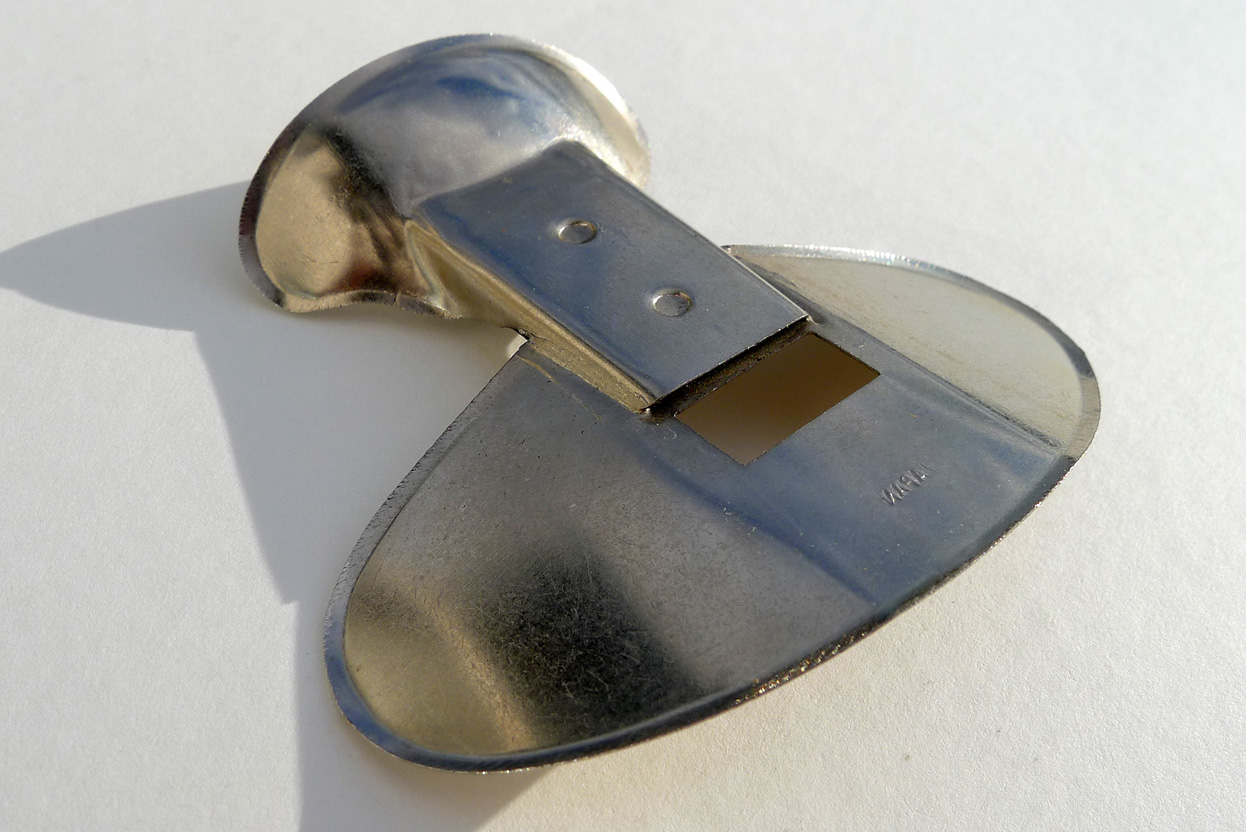
The instrument is a Humanatone made in plated tin, with a shape quite similar to the american plastic one, but with some light differences, partly due to the way of producing it.
The packaging used the exact graphic chart of its american cousin, but was simply inserted on a card, and not packed in a box.

The instrument in itself is absolutely gorgeous. It is made of nickel or chrome plated tin. The way it was produced is interesting. Two plates had been stamped and cut, corresponding to the shield on one hand, and the nose cap and duct cover on the other. Then both pieces were soldered together, and nickel/chrome plated. What's interesting is the way the instrument is cut in 2 parts : with the antique nose flutes, the nose cap was part of the shield plate. Here, the nose cap is the continuation of the air duct cover.


The japanese Humanatone is deprived of "true tremolo" hole, and has a shape lightly different from the plastic 50s model and, for sure, from the current plastic production by Trophy Music Co., notably by a smaller mouth hole.


---
About metal Humanatones, check :
Humanatone - part I : the metallic era
New Humanatone ads
The Two metal Humanatones
Another metal Humanatone
Humanatone boxes
Another Humanatone box
Humanatone: A very early user manual
A Humanatone and clones chronology
A Humanatone in 1892 ?
Rectification: Humanatone appearance date
And on later Humanatones :
Humanatone - Part II : the Gretsch plastic era
Humanatone - Part III : the Gretsch metal era
---
Humanatone - part I : the metallic era
Humanatone - part II : the Gretsch plastic era
One of the rarest industrial nose flute to be seeked by the collector is undoubtedly the japanese Humanatone. It surely was a Gretsch Mfg Co. instrument, according to the packaging design and the fact the owner of the brand was Gretsch, but it was produced in Japan and there is no mention of another brand that « Humanatone ». It probably dates from the 50s and/or the 60s.
 |  |
The packaging used the exact graphic chart of its american cousin, but was simply inserted on a card, and not packed in a box.

The instrument in itself is absolutely gorgeous. It is made of nickel or chrome plated tin. The way it was produced is interesting. Two plates had been stamped and cut, corresponding to the shield on one hand, and the nose cap and duct cover on the other. Then both pieces were soldered together, and nickel/chrome plated. What's interesting is the way the instrument is cut in 2 parts : with the antique nose flutes, the nose cap was part of the shield plate. Here, the nose cap is the continuation of the air duct cover.


 |  |
 |  |
 |  |


---
About metal Humanatones, check :
Humanatone - part I : the metallic era
New Humanatone ads
The Two metal Humanatones
Another metal Humanatone
Humanatone boxes
Another Humanatone box
Humanatone: A very early user manual
A Humanatone and clones chronology
A Humanatone in 1892 ?
Rectification: Humanatone appearance date
And on later Humanatones :
Humanatone - Part II : the Gretsch plastic era
Humanatone - Part III : the Gretsch metal era
---
Subscribe to:
Posts (Atom)