

... which is a wrong and dull representation. Indeed, in the 1900's, the nose flutes were not oxydized, and even more, whether some were painted, some were nickel or chrome plated. Ditto for the german and british metal ones.


Some of these antique nose flutes still show traces of that plating:

I decided to restore/protect one of my german metal Nasenflöten from rust, the one in the worst shape, very rusty. The goal was not to get a mint nose flute, as if it was brand new: it would be impossible with this technique, since the coat of new metal will be very thin, and all the tin already digested by the rust would not rebuild, for sure. I thought it would be stupid to plate a coat of chrome, since it is so shiny that it would not fit with the damaged flute. With a nickel plating, it would be less shiny, a bit renewed, and protected from rust for years. That would be enough.
First, I removed all the existing rust, by dipping the instrument into a dedicated "rust removal" product (I used "Rustyco").

Then I sanded the flute with very fine steel wool and cleaned it very carefully of any possible remaining "finger grease".
The nickel plating was (and still is) made by electrolysis (electroplating), and is rather easy to do at home. The only precaution is to perfom it outside, not to breathe the gazes. On that purpose, we need one piece of nickel, to be used as an anod, and a nickel sulfate bath (NiSO4 dissolved in water). Plus some usual accessories: a pot, some wire, batteries...
Nickel sulfate:

In my case, I used an already made NiSO4 solution, found in a electronic shop, used for... nickel plating. Warning: if you do it, be sure not to ingest this poison, and avoid to touch it (nickel sulfate is cancerogen by ingestion, but not explosive nor inflamable). The best is to manipulate it outside, with gloves. I also bought a nickel anod, but I could have used any pure nickel item (a real nickel coin, for instance):

First, I build my generator, with 4 regular LR20 batteries, linking in series 2 pairs of them, each pair being connected in parallel. So, I kept a low voltage (2x1.5 V), but doubled the intensity:

I ended the wires with crocodile clips (on the pic, one is covered to avoid contact with the other):

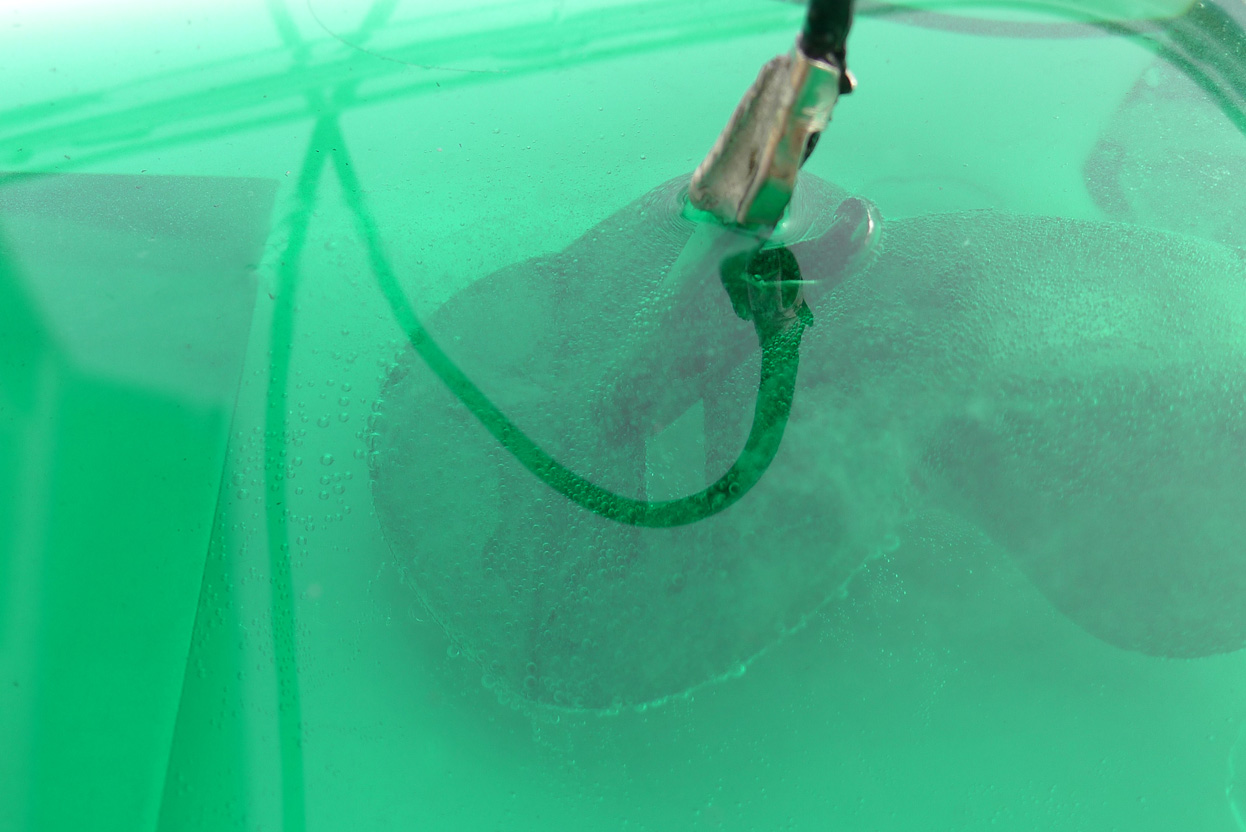
So, I placed the anod in the liquid, used the nose flute as the cathod, and connected them to the batteries.

I first made a test with a copper coin, and a light plating was visible after 30 seconds:

The plating work is much quicker while the piece to be plated is small and the electrolyte is warm. But my nose flute is a rather large piece, I want to work outside (not to inhale gazes) and the weather is very cold. So, my electroplating session will last long. I also will have to change the flute position, and also the crocodile clip location.

Immediately, many small bubbles surround the nose flute. And the closer the flute is to the anod, the more effervescent the solution gets (intensity, and thus efficiency, raises).


 |  |
 A short video:
After a while (30 minutes) I checked the plating. Well, the nickel had already plated some parts of the flute, but not evenly. It was the sign that I hadn't cleaned the instrument enough (the dull color is a regular result, it needs a buffing to get the nickel shiny).

So I cleaned the nose flute more carefully and dipped it again in the electrolyte.
After 2 hours, the job was done. Almost. Indeed, just out of the bath, the nose flute was very dark and dull:
 |  |
 |  |


