This blog is dedicated to the sublime instruments called nose flutes and which produce the most divine sound ever. We have chosen to discard all the native models from S. Pacific and Asia, for they need fingering to be played. We'll concentrate on "buccal cavity driven" nose flutes : the well patented and trademarked metal or plastic ones, plus, by a condemnable indulgence, some wooden craft or home-made productions.

Apr 25, 2012

Enhance your flute - Part II : The Swan flute

One doesn't need a magnifier to observe how the plastic « Swan logo » flute is badly finished. Edges not leveled, glue traces, bubbles and smears, and worst of the worst, the labium is crappy and uneven, at the point that it is not even parallel to the end of the air duct, it is oblique!


So, I decided to check if this nose flute is improvable.
First, I sanded it all, to erase all the marks and flaws, and totally removed the labium.


And then, I prepared a new labium, cut in a 2mm thick aluminium plate. I filed it rather sharp, and sanded it.


I beveled the labium frame in order to get a larger gluing surface, and used bi-component epoxy to settle my new aluminium blade.


I could have sanded more finely the flute and stop there. But I do not like much the colors provided by the Swan company, and prefered to try to paint it into a kind-of-metallic color.
So, I put some cellotape on the blade to protect it, sanded a bit more evenly the flute, drilled the lace holes and sprayed with paint.


I stupidly chose a silver spray dedicated to paint Christmas accessories...
On one hand, it was very difficult to get a regular layer (either you get an uneven layer if you spray from too far, either you quickly get smears... and the right distance and quantity varies with the level of product still in the bottle...). So I had to re-begin several times (wait for a complete drying, then sand completely the flute, then spray again:).
On the other hand, I discovered afterwards how fragile this "interior" painting was. A very light hit of a nail was able to scratch the very fragile and thin shiny silver coat...

I wish It could have stayed like that...


... but I would have had to never touch it again, even less play it!

So... So, I scraped the mix of painting and cellotape from the labium, and applied lemon oil. I had tried varnish, but it had totally melt the painting, and I had have to redo the whole process again (Sanding, painting:). I don't know why I chose lemon oil, but I have to admit this intuition was... rather inspired:). Lemon oil is generally used to maintain wooden fretboards, so there was no reason to used it there.
The fact is the coat of lemon oil removed the very shiny painting coat, melted just a little bit the painting, just enough to get it even and smooth. Then, put it on the heater, and some 20 minutes later, the shiny came back, hard and dry, and the color had turned to a medium-dark metallized shade. Certainly not looking as silver, but beautiful too!


Well, the result is not « perfect », but quite enjoyable.

And now, let's compare with the original :

On the sound side, there is also a huge improvement. The new sound is more precise, clear and loud.

Here is a sound comparison. The first musical phrase was recorded with an original Swan nose flute, and the second with the enhanced one. I did my best to blow the same way and with the same strength, at the same distance of the recorder, and with the same settings.


---

On the same topic, please visit :

- Enhance your flute - Part I : The Humanatone
- Enhance your flute - Part III : The Bocarina™

---

Apr 24, 2012

Good news from/for Japan!

Mr. Tetsuyuki Sudare, owner of the shop Temiruya and very good nose flute player (we published his last video there) just announced he will sell the Bocarina™. This is a very good news for Japanese players, who had difficulties to get them easily.


Here is Mr. Tetsuyuki Sudare's post on Facebook (you may copy the text and paste it here for an approximative translation)

南アフリカのChris Schuermansが近年発表した鼻笛です。
世界レベルで非常に高く評価されていて、日本でもぽちぽち見かけるようになりました。

世界楽器てみる屋は鼻笛の専門店ではありませんから、今以上にバリエーションを増やしてどうするのか、と販売を見送っていたのですが。Chris Schuermans本人から「売ってくれないか」と直接メールが来ました。向こうからわざわざ声をかけてくれたのに、蹴る理由はありません。二つ返事で取引することになりました。今、代金の支払い方法など取引条件を確認しています。

Chris Schuermansが日本の鼻笛職人たちと大きく異なるところは、彼は工業デザイナーだ、ということです。彼は自分の作品を作品としてでなく、大量生産品として完成させることに徹底的でした。3次元CADを使って形状を設計し、精密な金型を起こしました。金型って、小さな物でも数十万~百万円くらいしますよ。彼が自分の作品を世界中に広めるためにどのくらい本気か、ということが分かるってものでしょう。

今後において日本の鼻笛市場は激変する予感です。粗悪なベトナムの鼻笛はもう論外、完全に他の鼻笛の引き立て役です。バカ安のトイノーズフルートは別格ですが…もっと値下がりするんじゃないかな。埼玉の鼻笛 vs あだち区の華笛 vs 南アフリカの鼻笛の三つどもえが目を離せません。お互いにどう差別化を図り生き残るかが重要な争点になります。潰し合わせることなくみんなそれぞれ引き立てて共存できるように考慮することは、私たち商人の責任でしょう。それにしても、日本の鼻笛職人たちは新参の外国勢力に対してどう対抗していくつもりなのでしょうか。

その辺もあって、私は販売をためらっていたんですけどね…
既に売っているお店もあるのに、私だけ頑固になって乗り遅れるのも嫌だし。私はシステムエンジニアですから、個人的にはChris Schuermansのあり方はすっごい好きなのです。私は私の態度を決めなければなりません。とりあえず南アフリカからサンプル品が届いてからの話。

Just for fun : nose flute and... bucket

A video showing a lonely man, full of joy and self-confidence.

Apr 23, 2012

Kentucky T. Dutchersmith CD reviews

We already posted here a famous video in which Kentucky T. Dutchersmith plays cello, nose flute and percussions, accompanied by the Maple City Chamber Orchestra (see this post).

In 2004 and 2006, Kentucky T. Dutchersmith and The Rubber Band (auto)published 2 CDs, Mama don't allow no nose flute playin' 'round here and If You're Not Goin' Far.

Kentucky T. Dutchersmith and The Rubber Band is a "christian familial humoristic country folk rock" ensemble, composed by three core families, all from Indiana :

The Dutchersmiths:
-Kentucky T. "Kent" Dutchersmith (lead vocals, bass, nose flute)
-Teresa Dutchersmith (vocals, melodica, percussion)

The Harley-Kruschwitzs:
- Brian Kruschwitz (vocals, guitars, banjo, congas)
- LuAnne Harley (vocals)
- Harley (vocals and spoons) and Owen (chief roadie) Kruschwitz.

The Brill Bergstressers:
- Deron (drums, congas)
- Annette (sound, photographer, CD designer)
- Alina (toddler proofing consultant) and Marta.

From cdbaby.com
« Kentucky T. Dutchersmith and The Rubber Band is a fun, high-energy, family-oriented band. Their music has been described as creative, bluesy folk-rock, socially conscious, humorous, eclectic and original. Kent, being a musician, a father and an elementary school teacher who was sick and tired of children’s music that kids loved but drove parents crazy, had a dream of producing music that would appeal to both children and adults. His songs focus on everyday situations, such as Sunday morning waffles, a bad hair day, and what to do when you're feeling bored. »

From The KTD website :
« Kent was given his first nose flute by a girl friend in 1992. Having received the nose flute in the mail and having never seen or heard one before, he didn't know what to make of it and couldn't get a sound out of it. Months later, at a Mennonite Voluntary Service retreat, he finally got a sound out of it and fell in love with the sound (and fell in love with his future wife, Teresa). His (somewhat limited) popularity as a nose flautist grew after he performed his own Medley in C For Cello and Nose Flute For One Person at the 1997 Mennonite Youth Convention in Orlando, Florida in front of a crowd of 5,000 high schoolers, where he was honored with a rousing standing ovation. Kent founded the San Antonio Mennonite Church Marching Nose Flute Chorus, which became a fixture of the King William Parade in San Antonio, Texas. Kent has been featured as a nose flautist on the Fox 28 morning show and in the Elkhart Truth. His greatest honor as a nose flautist to date was performing Concerto Pomposo (the "Nose Flute Concerto") by Jean-Marie Hottetotte at Goshen College's Sauder Concert Hall two times―September 27, 2003 and October 14, 2007. The 2003 performance was notable because it was believed to be the North American debut for this piece and it was played on a common plastic nose flute. The 2007 Concerto Pomposo performance featured Kent on his hand-made wooden nose flute crafted by the great German nose flute maker, Maximillian H. Zycha, which Kent received Christmas 2004 from his loving wife, Teresa. ».


---

Well, first thing to say to nose flute lovers is that, contrarywise to what you may have thought after viewing the KTD's videos on YouTube, only 5 songs, among the 31 songs composing the 2 CDs, include a nose flute track. They are :

CD Mama don't allow no nose flute playin' 'round here :
01·Mama Don't Allow No Nose Flute Playin' 'round Here
09·Nose Flute Blues
13·Nose Flute Advice

CD If You're Not Goin' Far :
04·The Nose Song
15·Oh Susanna (Don't You Blow My Nose)

So, let's dare to say that the nose flute is essentially a condiment here, not a lead instrument.

Most of the songs are soft folk or country rock. There are also some bluesy pieces, some funk ones, and 7 songs are a capella (or with voices just accompanied with percussions). Most of the songs are partly sung by one or several children, and also include onomatopoeias and/or noises.

---

A general criticism that one can immediately formulate about both the CDs, is that the production is a bit weak. When I write "production", I do not speak about the playing and arrangement, but the sound recording and mixing quality. Only the electric instruments (guitar, bass..) sound round and full, but the acoustic tracks are a bit "weak", probably because the recording tracks were left untouched and dry. A hint of reverb, for instance, would have been very welcome on the nose flute. A mixing with some panoramic stereo also, placing the instruments in different places of the "sonorous space".

Thus, on the nose flute parts, any small mistake in the playing is easily identifiable, and there are. This may have been a deliberate choice for "musical truth", but it harms the listening comfort.

Contrarywise, the arrangements are generally well thought, not very original yet, but with fun.


The nose flute songs

Mama Don't Allow No Nose Flute Playin' 'round Here is a scat/hillbilly funny song in which the nose flute plays the first solo and then is dispatched by hints.

Nose Flute Blues, as you can imagine, is a classic blues. The nose flute plays a continuous accompaniment solo. To my taste, it is not very well played, sounding more like a asthmatic bird... (why no reverb on that?!?)

Nose Flute Advice is a gentle ballad which lyrics are dedicated to the nose flute :

If you want to play the nose flute, I have some advice for you.
If you want to play the nose flute, make sure that you first blow your nose
If you don't blow your nose first, stuff from your nose may flows.
If you want to play the nose flute, and another instrument at the same time,
You can rubber band it to your face, but it won't look very nice.
If you want to play the nose flute, don't play really really really long notes,
If you play really really really really really long notes, you just might pass out.


The Nose Song is a reggae song. Here again, the nose flute is used as a condiment, and is almost bothersome, like an obnoxious bird following you in all your moves and singing "tüt-tüt" in your ear.

Oh Susanna (Don't You Blow My Nose)
: In this standard, played at the banjo and percussions, the nose flute has a much better role, whistling the melody. The lyrics are funnily revisited :
« Oh Susanna, now don't you blow my nose, when coming from Indiana with a nose flute on my nose »

You can hear excerpts of the songs here and here :

CD Mama Don't Allow No Nose Flute Playin' 'round Here
CD You're Not Goin' Far

---

Here is another video by Kentucky T. Dutchersmith, quite funny and well played, with the Zycha flute and the Maple City Chamber Orchestra.

Apr 22, 2012

Archive : Felice Pantone on TV

An old (!!!) TV program dating of...2009, in which the italian musician and comedian Felice Pantone plays When The Saints Go Marching In on his nose flute and on an impressive percussions-washboard gear. The program was "Parla con me", on Rai-Tre.
The flute is held by his invention : the Reggi-Flauto.


---

About Felice Pantone, you may read those posts :

> Ugo e Casimiro, an extravagant duo
> Felice Pantone, Musician and Inventor (interview)
> A nose flute accessory : the Reggi-Flauto

External links :

> Il Grillo Web
> The Casimiro/Alberto Bertolino's Youtube channel
> Spicchio di Luna : an mp3 song to buy on Amazon

And to contact Ugo & Casimiro : felipan[at]tiscali.it or info[at]musicaistintiva.it with replacing [at] by @, for sure.

Apr 21, 2012

A little Handler review by ShowNoseFlute


Sho Hirasawa emailed me this little review about the flute by Heinrich Handler I sent to him. Here it is, as is, and accompanied by the video-test he made with it.
(To answer his question about the « nice aroma » : I had put some protective lemon oil on the instrument)


I feel it to Handler's is made for high tone.
I don't have one can play high tone easy, ever.
And, Its high tone has power, It is nice too.

I don't got used to this type nose flutes, short time.
I train playing this type nose flute.
Lated upload, because it.
Its high tone tuning like +8ver for vietnamese one.
I surprised this point !
And, it can play long high tone easy.
It is very very comfortable!
I like Handler's nose flute.
It has character of different from others.

I think it to this nose flute lend handsfree.
I got a technique of playing Handler's, when I notice it.
I chalenge handsfree in this video:-)

I smell sweet nice aroma from it.
Can you tell me, what smell from.
and, bag has pattern of notes is nice too!
I put japanese amulet on this bag;-)

I enjoy it to discovering Handler's nose flute world now!
Thank you for send it to me!

Thanks a lot !!


Show Hirasawa

P.S.
Picture is Handler's nose flute and bag with japanese amulet :-)


A Humanatone and clones chronology

In order to clarify my previous post, I attempted to depict a chronology of the Humanatone and its clones : old and modern shapes, that is, metal and plastic. The zones in plain color are "sure", and the ones filled with gradations represent uncertain dates.


----

About metal Humanatones, check :

- Humanatone - part I : the metallic era
- New Humanatone ads
- The Two metal Humanatones
- Another metal Humanatone
- Humanatone boxes
- Another Humanatone box
- Humanatone: A very early user manual
- The Magic (Nose) Flute: only questions... .
- A Humanatone and clones chronology
- A Humanatone in 1892 ?
- Humanatone: Early promotional demos
- Another Humanatone archive
- Huma... something
- Rectification: Humanatone appearance date
- Great paper from 1903
- Nose Flute Pioneers: The Stivers - Part I
- Nose Flute Pioneers: The Stivers - Part II
- Nose Flute Pioneers: The Stivers - Part III
- Nose Flute Pioneers: The Stivers - Part IV
- Nose Flute Pioneers: The Stivers - Part V
- A Humanatone as a scientific tool
- Two other Humanatone Ads

And on later Humanatones :

- Humanatone - Part II : the Gretsch plastic era
- Humanatone - Part III : the Gretsch metal era

-----

The Magic (Nose) Flute: only questions...

At the bottom of page 10 of 1903 A.O. & E.C Howe's musical instruments catalog, there is an insert for a « Magic Flute ». It's a metallic nose flute, nickel plated.


Some facts...

Fact 1
• In his 1904 trade-mark documents, James J. Stivers wrote about the brand "Humanatone" : « This trade-mark has been continuously used in my business since July 6th, 1903 ». Let's say at the same time than the Magic Flute.

Fact 2 • I've never seen (weak fact) any other ad for a « Magic Flute »

Fact 3 • It exists a metal nose flute stamped « Magic Flute », dating from these times, and wearing 2 numbers, one for Australia and one for New Zealand. I reached the Australian patent office, and they confirmed those numbers refer to trade-marks registration numbers and not patents numbers. They are "N°40634 AUST" and "N°22231 N.Z". I found no traces (documents) for their registration.


Fact 4 • The "Magic Flute" has the **exact** same shape than the first Humanatone (the one with the rounded top [see this post]), including the folded flaps and rivets, and the rounded rectangle air entrance.

Fact 5 • There was a "Magic Nose Flute". I don't know when it began to be sold, but I found many ads for it from 1928 to 1950.

Fact 6 • In the 1928 Johnson Smith Novelty Catalog, there is an advertisement which shows a drawing which is a part of the drawing displayed on a Humanatone user manual (see this post). Here are they :


Fact 7 • In the Nov. 1928 issue of Popular Mechanics, an advertismement for the Magic Nose Flute explicitly says : « The Magic Nose Flute, or Humanatone...». (same inserts in the Oct. 1929 and Nov. 1930 issues)


Fact 8 • In the very first issue (#1, Summer 1939) of the Superman comics, there are two advertisement inserts for a nose flute : The first one refers to the "Magic Nose Flute", and the second one to the "Humanatone" (for real with a mistake, since it is printed « Humatone » at the very end of the text).


Fact 9 • (at least) the 1940, 1944, 1947 and 1950 issues of Johnson Smith Novelty Catalog displayed the same insert, with minor differences between 1940 and 1944 : the price evolved from 10¢ to 15¢, a text was added besides the boy's head (« You can play it if you can talk »), and the little insert text below was changed from « Play Marches, "hot tunes",... » to « Play "hot tunes", swing music,... ».
There is also a change at the end of the description : the following passage was suppressed : « Most anyone can play it and the performer with the true "gift of music" will feel it, with very little practice, one of the most easily controlled music producers it is possible to imagine. »

Anyway, from (at least) 1940 to 1950, there are no mentions of the brand Humanatone (which was officialy bought by the Fred Gretsch Mfg. Co on Jul. 19, 1947, to brand the modern plastic version which appeared on the market between Jan. 1940 and Autumn 1943 [see this post].

Here are the 1940, 1944, 1947 and 1950 inserts :


---

Now is the time for questions ...

Question 1
• Was the "Magic Flute" a separate product or was it the very first version of the Humanatone, before the brand Humanatone was registered ? It is a real possibility, since the Magic Flute is the exact clone of the first Humanatone, and that since the brand Humanatone was « continuously used in [stivers'] business since july 6th 1903 », it seems difficult to be used in a catalog of this very year (catalogs were generally printed at the end of the previous year, or at least at the beginning of the current year).

Question 2 • Is the Magic Flute showed on the pictures above the "same" Magic Flute ? And in this case why was it stamped by Australian and New Zealand registration number ? Was it a Humanatone forgery ? (difficult to imagine, since it has the very shape, including little details...). Was it a specially branded Humanatone for AU and NZ by James J. Stivers ? Why a specific brand ? Or by someone else ? Who ? Or was it a different "Magic Flute" than the one advertised on Howe catalog ?

Question 3 • It appears obvious that the "Magic Nose Flute" and the "Humanatone" were the same products. Were they both produced by the James J. Stivers company ? If so, why ? Were there a brand (Humanatone) dedicated to "serious" music shops and one (Magic Nose Flute) for novelties and toys catalogs ? Or did another manufacture buy the patent to Stivers for a parallel production (this would sound strange that Stivers had accepted, because both products were direct competitors, at least between 1928 and the 1940s).
Who continued to produce the metallic Humanatones under the brand Magic Nose Flute after that Fred Gretsch bought the Humanatone brand ? Was that the Stivers company, which already had the machines and know-how ?

Question 4 • Is there a link between the "Magic Flute" and the "Magic Nose Flute"? In this case, the link between "Magic Flute" and "Humanatone" would be traced (see question 1)

Question 5 • What year the "Magic Nose Flute" stopped to be produced/sold ?

If any of the readers of this blog has answers, or posess musical instruments catalogs, or Johnson Smith catalogs, notably prior to 1928 or later than 1950... Or any material (magazines, photos, showing the Magic (Nose) Flute... Please please please, help me!

>> See the following topic : A Humanatone and clones chronology

---

Apr 20, 2012

Just for the fun : a nice quatuor !

A funny video performed by the Floutum Snoutum ensemble, four boys and three « Floutettes ». You can also watch them in a (as... theatrical) version of Somewhere over the Rainbow here.

Apr 19, 2012

Janne Bengtsson and his kilt


Janne Bengtsson is a swedish comedian and musician. He is member of the band Lars Vegas Trio in which he hold the drums, sings and dances, but also, sometimes, plays the nose flute.
There are numerous videos on YouTube showing him, wearing a kilt with the band or in a formal suit during a stand up performance, interpretating what looks to be his greatest hit : El Condor Pasa. In this show, he hardly whistles the peruvian song, but plays with the nose flute ability to make funny noises when speaking.

Here are our 2 selections (chosen for the image quality), but you can check other versions here, here, here, here, and here!


Apr 18, 2012

Ukulele and... nose flute

If you are in Germany at the very end of this month, don't miss Ukoliv! Ukoliv! is an international ukulele festival that will stand in Mannheim on 30th of April, at the Theater Oliv.
Four bands are programmed : the great german ukulele ensemble Das Resopal Seminar, organizer of the festival, L'Uke, the cool americano-german duo, the gorgeous dancers of Zaghareet (NL/DE), and Feed The Diva! (FR/DE) with ... the incomparable Nosy Diva herself (nose flute guaranteed :)

Apr 17, 2012

Review : A nose flute by the Ise Association

The Japanese Ise Nose Flute Friends Association (Nihon Hanabue Kyokai Ise Tomo no Kai) is a very active organization. It was founded in December 2009 and gathers many members. Lead by their President, Mrs Emiko Sato (who is a writer and notably has created a blog dedicated to hanabue), they have playing sessions, but also travel to meet the other Japanese associations and organize ceremonies with guests.


The Ise association vice-president, Mr. Takuma Ikeyama (池山 琢馬) is a carpenter, but also crafts the wooden nose flutes branded and sold by the association.

Thanks to my good friend Sho Hirasawa (ShowNoseFlute on YouTube) who sent one to me, I was able to put the nose on a Fuu nose flute (Fuu, « wind and rain », is the brand of the Ise association nose flute workshop). Let's just say : Yeehah! and thanks a lot to Sho!

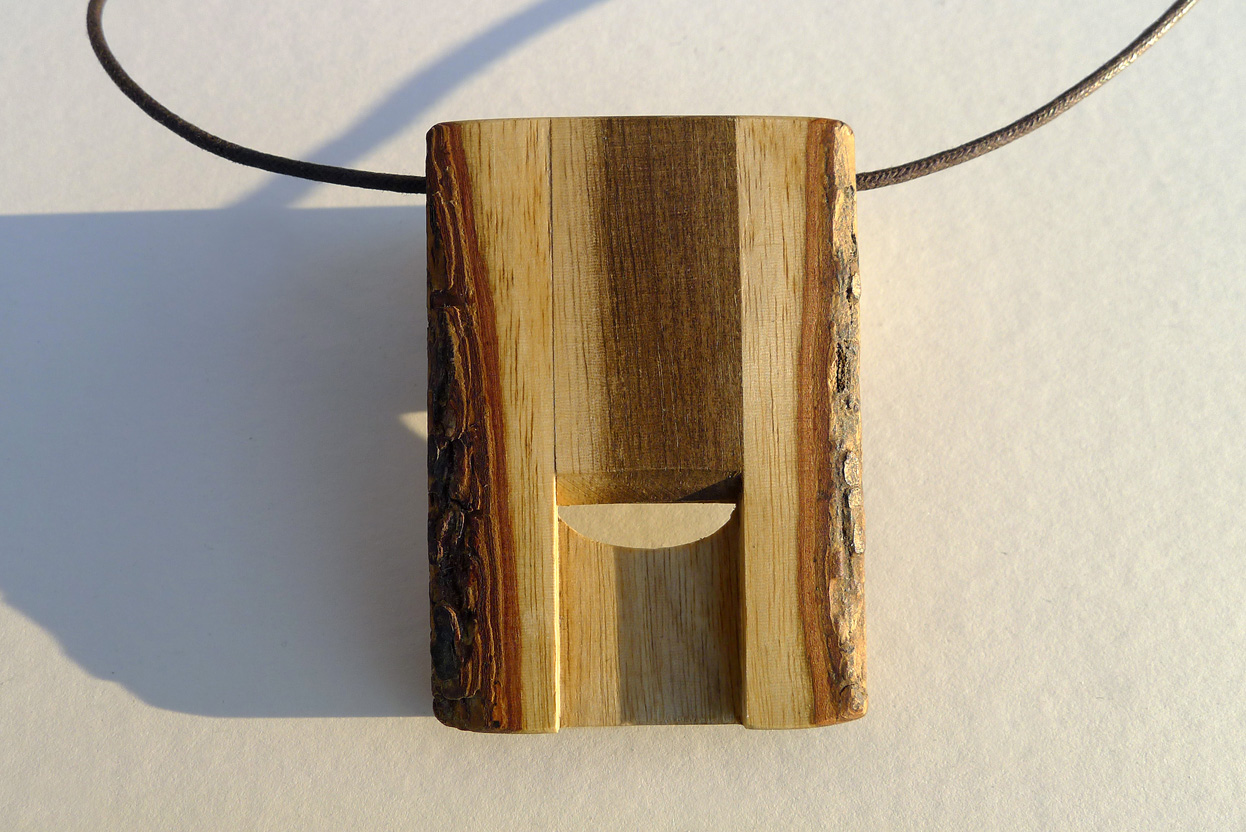
First of all : this flute is absolutely beautiful. It's been made in persimmon wood, with raw bark kept on the edges, and with a two-colored piece of wood on the front of the air duct. It has a very original design, very Japanese. It has a comfortable size (5 x 7 cm).


The second thing I noticed is that the Fuu hanabue smells very good. It has been gently oiled for protection, and the mix of wood and oil aromas is very pleasant.

The craftmanship is at a high standard, with clean edges and assembling, the finishing has been done with care, sweetly sanded, and a waxed lace has been added for handfree playing, with a simple yet efficient pair of sliding knots.


What is amazing on the Ise association hanabue, is the thinness of the air duct : it is less than 1 mm thick and faces a very sharp rounded labium, with a 5 mm gap at its farest. This provides a very powerful and precise loud sound.


The backside is of « vietnamese » type, with a half-pipe nose rest bored with a round hole. Generally, this arrangement does not fit well the western noses, oftenly ended with cartilage. But on the Fuu nose flute, the half-piped nost rest has been slanted and the problem is nonexistent (with my nose at least). The fact is this flute is very comfortable and very ergonomically designed regarding my physiognomy.
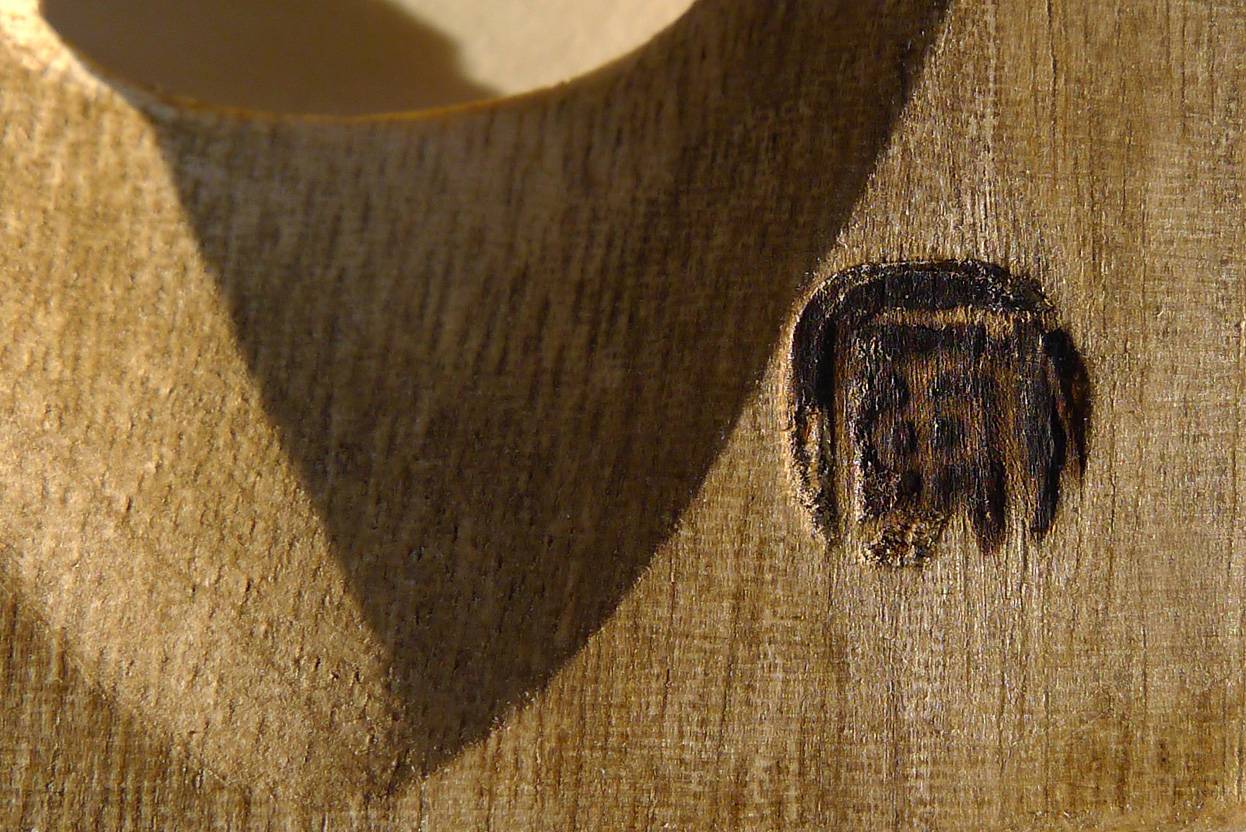
The internal side feature the round seal of the association, stamped with a hot iron.


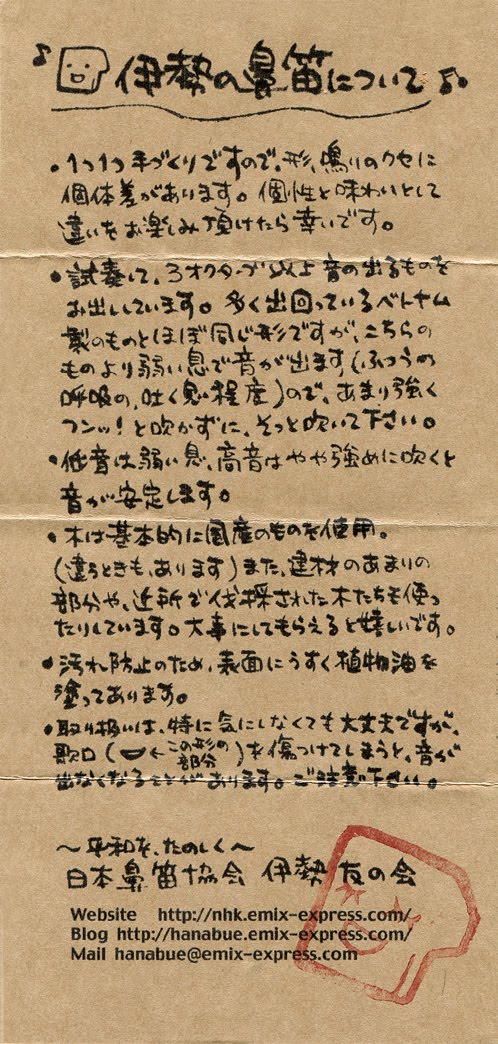
The Fuu nose flute comes along with two papers, one teaching the way to play nose flute in general, and the second about the Ise habanbue in particular, how to take care of it, etc. Thanks a lot to Sho Hirasawa for having taken the time to translate them for us :

On the sound side, I was really amazed. I generally say that a flute can be a good instrument for one player and not for another one, depending on the ergonomy, the size and so... And I think it is true. But in this case, there are also objective points : the way the technical parts are made and designed. The air duct / labium system is really efficient. Then the ergonomics and sizes fit very well my face. This flute is without no doubt my best wooden nose flute, or should I say, the one that fits me at best.

The sound is loud and very precise, and the flute is able to reach from high sharps to low bass, both clear and clean on more or less 3 octaves, depending on your buccal abilities. The Fuu flute offers a very quick answer to solicitations, thanks to the powerful air flow system, allowing very quick playing, and the precision enables easy modulation (vibratos) with the tongue.

Here is a sound sample I made (just added a pinch of reverb) :


---

Links :

>> To Japanese Ise Nose Flute Friends Association website
>> To "Emiko Sato's hanabue blog

---

And as a bonus, look at the beautifully designed postacard that Sho sent to me, and the nice little drawing on the back of the envelope... Thank you Sho!

Apr 16, 2012

Nose flute as a healing tool

Our beloved little instrument is perfect to play music; it is light and handy, and easy to begin with. It can be used by children as a funny toy, as by masters like Mosurin. It can be useful, as used by the Guaranis to call birds.
But is that really all? All around the world, there are people to laud the nose flute therapeutic abilities. Let's have a quick tour...

« Sing together, touch the instrument, move the body »... this could be the motto of Mr. Guan Wei Chen (管 偉辰 / かんいたつ), CEO of LyriMusica (株式会社リリムジカ), a Japanese company founded by Mrs. Moe Shibata in 2008 which provides care and assistance to old and dement people. It is specialized in music therapy, notably with the help of ocarinas and nose flutes, but also with many other instruments. Its staff has implemented more than 600 music therapy sessions since March 2009.
(Note that LyriMusica is recruiting a partner music therapist)

>> LyriMusica website


In the same kind of nose flute activities, and besides her professional viola playing with orchesters, musicians or choirs, Birdy K., well known on YouTube as « The Nosy Diva », works in Germany as a free lance musician in senior citizen's and nursing homes, providing music cares.

« In my musical work with old, often demented people, I use the noseflute quite regularly, with good success. Laughing, amazement, just the typical reactions you always get with that funny instrument. Some people are irritated and do not like it, but that is rather normal. Concerning noseflute playing  with handicapped people - I do not have very much experience with that yet. I worked with a paraphlegic lady who enjoyed playing very much and would not have been able to play any other instrument since her hands are too weak.
I will soon be doing a a noseflute workshop at an integrative sports event with handicapped kids, I am looking forward to that.
»

Here is a recording from a little private workshop given by the Nosy Diva at the home of one participant. The boy had just learned to play the noseflute some minutes ago and the recordings were done quite spontaneously :


In the USA, the nose flute is oftenly used as a tool for improving children's breath or speech abilities.

TalkTools is a company specialized in « oral placement therapy for speech clarity and feeding ». In its product catalog, which includes Humanatones, you can read :


At Hilton Central School District, Mrs Simpson practices oral speech therapy :

« The nose flute is used to establish and increase volitional airflow through the nasal passages. This horn helps the child practice nasal exhalation to reduce mouth breathing. »

---

On a psychological side, the nose flute is also used as a tool. In Canada, David Gouthro, a consultant in management, implements nose flutes as a life metaphor, and a self-development instrument [see this post]

The famous YouTube Dutch nose flutist Job The Pas is a pedopsychologist. His company, PSYCHOS, is specialized in helping the children « who are experiencing social conduct problems at school and at home, often related to handicaps (weak intelligence, dyslexia, mental disturbances), peer problems, immigration problems and/or traumas. »

Mr. Job Te Pas uses the nose flute as a communication tool, visiting his clients at home.

« When I hear at his way of talking, talking in high & low tones, I try always his level of singing. When he can sing a simple song good in tone, I try to teach him some tones on the noseflute. When he shows one tone he gets the flute. »


Still not convinced ?

Apr 15, 2012

Piano and nose flute

Yoko Yang (ヨコ★YANG), aka JodelYokoYang on YouTube, is a member of the a capella band The Zircons. He also plays solo, as we can see in this video, on the piano and the nose flute. Don't miss the beginning this other video with a cry from the heart at 0'21" (but the top of the cries of the heart was produced by Hanabue 114, and you can hear it here).